
Outside, the bleakness of midwinter is all around us. We’re right in the midst of some of the UK’s most fertile farming country.
But as we step inside the massive, dimly lit warehouse, you wouldn’t have a clue about all that going on outside: it’s as if the clock and calendar don’t apply in here, with no sunlight to give any hint of time of day or season.
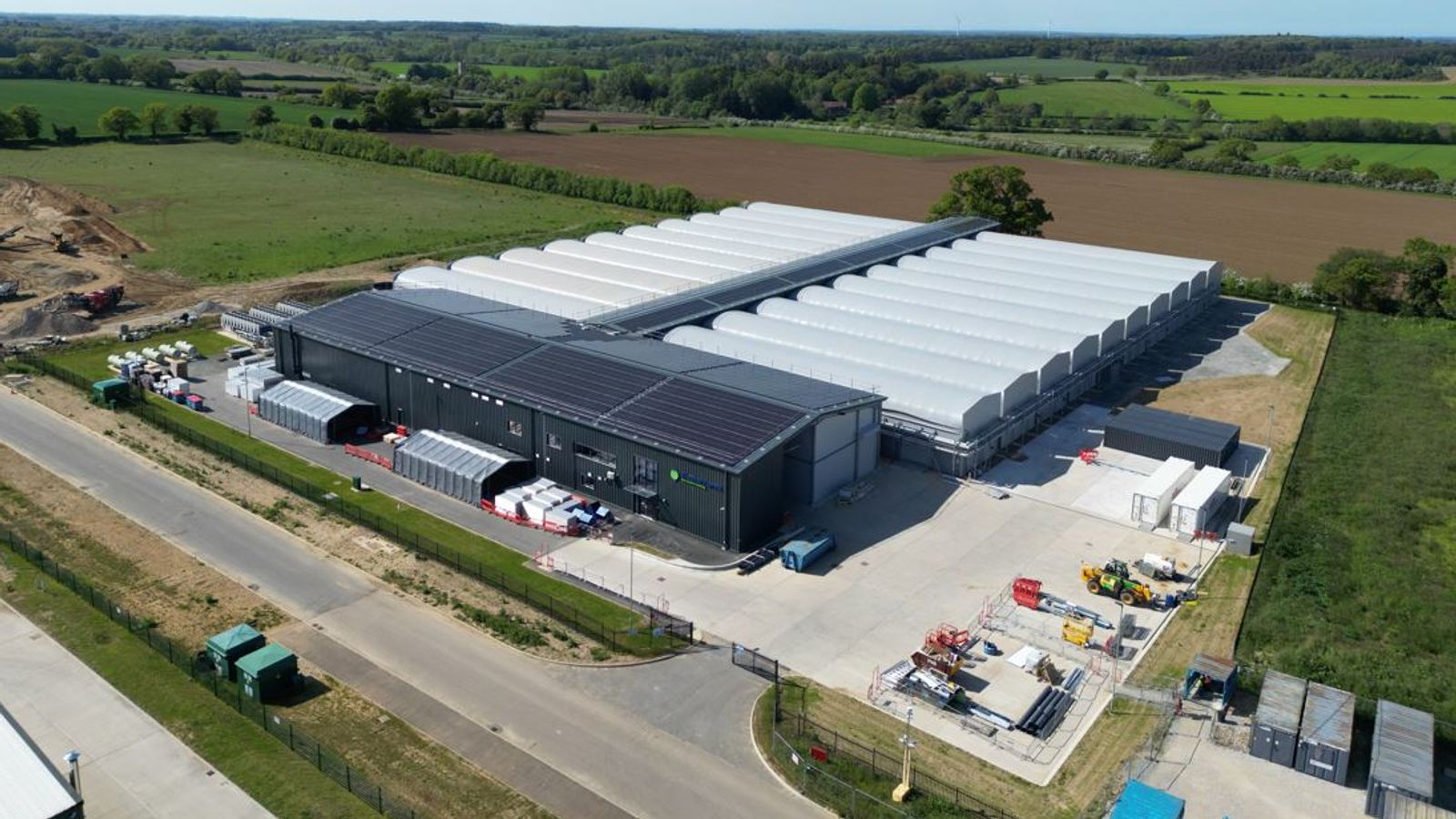
We are at Fischer Farms – Europe’s largest vertical farm.
To create an environment where plants can grow in close proximity to one another (vertically, in high density). The thinking is that you can cultivate items such as salads or peas near to the locations where they are consumed, rather than hundreds of miles away. The location is not meant to be a deciding factor.
The fact that this particular farm is located a few miles outside Norwich is somewhat unimportant. It could be anywhere. Interestingly, unlike most farms, which are often named after the family that owns them or a local landmark, this one is simply called “Farm 2”. “Farm 1” can be found in Staffordshire, if you were wondering.
Farm boss’s dizzying ambition
These forward-thinking farm units are the brainchild of Tristan Fischer, a seasoned business owner with a background in various renewable energy ventures. His goal now is incredibly ambitious: to be able to cultivate not just basil and chives in a farm like this, but also more challenging and competitive crops such as strawberries, rice and wheat.
Only then, he claims, can vertical farming truly have the potential to change the world.
The concept of vertical farming has been around for over a century. As far back as 1915, American geologist Gilbert Ellis Bailey proposed the idea in theory. In theory, plants can be grown hydroponically – using a mineral base instead of soil – in a controlled environment, which should lead to a significant increase in production.
In one sense, this is exactly what’s already happening in greenhouses across Northern Europe and the US, where tomatoes and other warmth-loving vegetables are grown in controlled environments. Nonetheless, a key distinction remains: most of these greenhouses still rely on natural light, possibly supplemented by electric lighting. The underlying idea behind vertical farming was that by adjusting the amount of light, one could cultivate almost any produce, regardless of the time of year. Moreover, by stacking crops together, one can even enhance crop yields per acre of land used.
Take a look at a long-term graph of agricultural yields in this country and you’ll begin to understand why this might be significant. The volume of crops produced per acre of land increased dramatically in the latter half of the 20th century – largely due to the widespread use of artificial fertiliser and the introduction of new technologies and systems. However, this productivity growth started to slow down towards the end of the century.
‘Changing the equation’
Vertical farming, it seems, has the potential to turn the tables, significantly boosting agricultural output over the coming years. The issue at hand is whether the technology is advanced enough to make it a reality.
And when it comes to the technology, one thing has certainly changed. The initial vertical farms (the very first attempts actually go back to the 1950s) all had a major problem: the light bulbs. Incandescent light bulbs were both too hot and too energy-hungry to function effectively in these establishments. But the latest generation of LED light bulbs are both cooler and more economical to use, and it’s these bulbs you need (in huge quantities) if you’re going to make vertical farming operate successfully.
Read more from Sky News.
In a time of upheaval, Sky News spent a pivotal 12 months on a farm
Rising sea temperatures will be ravaging fish populations by the mid 2000s, leading to a severe shortage by 2050.**
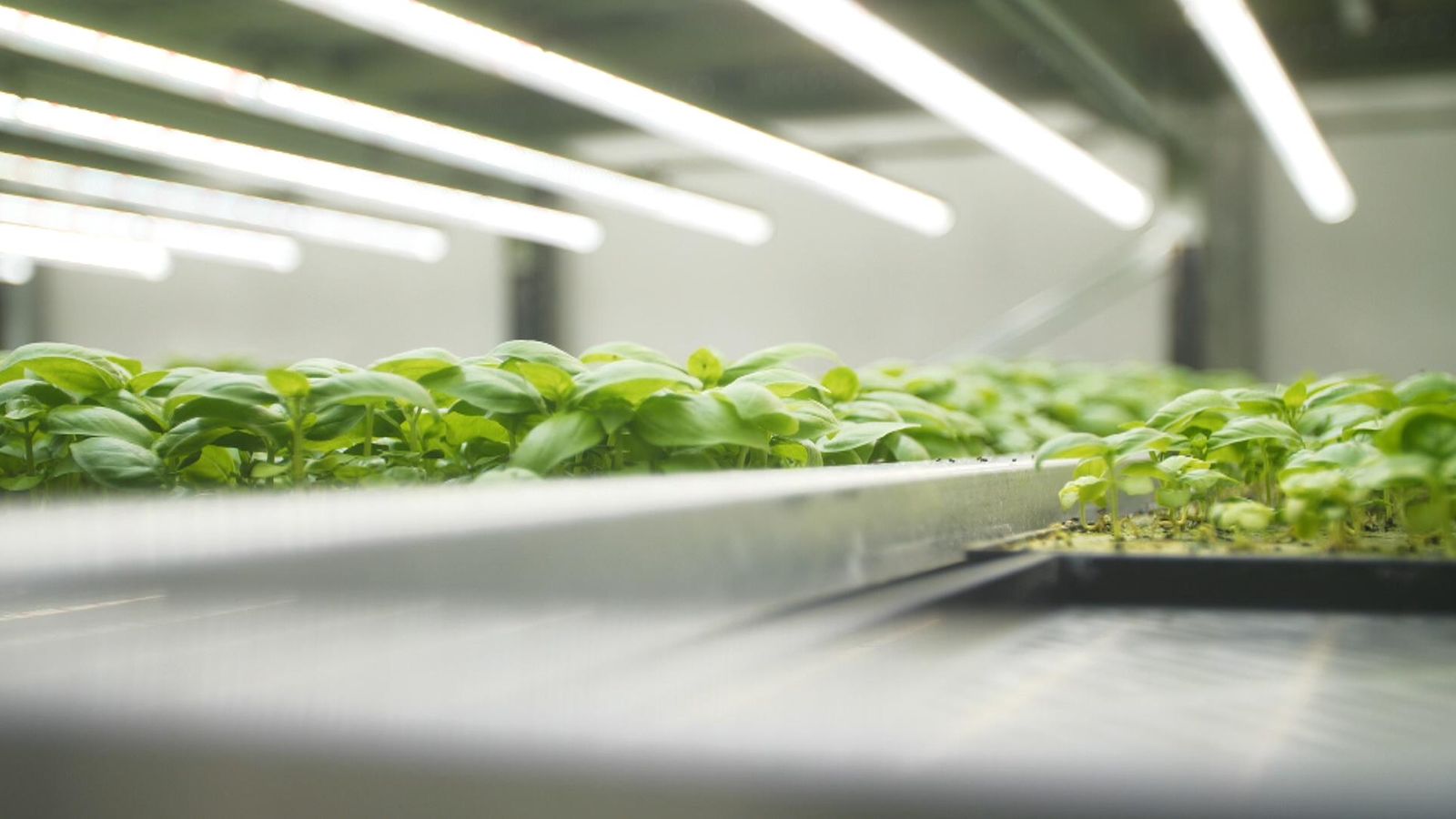
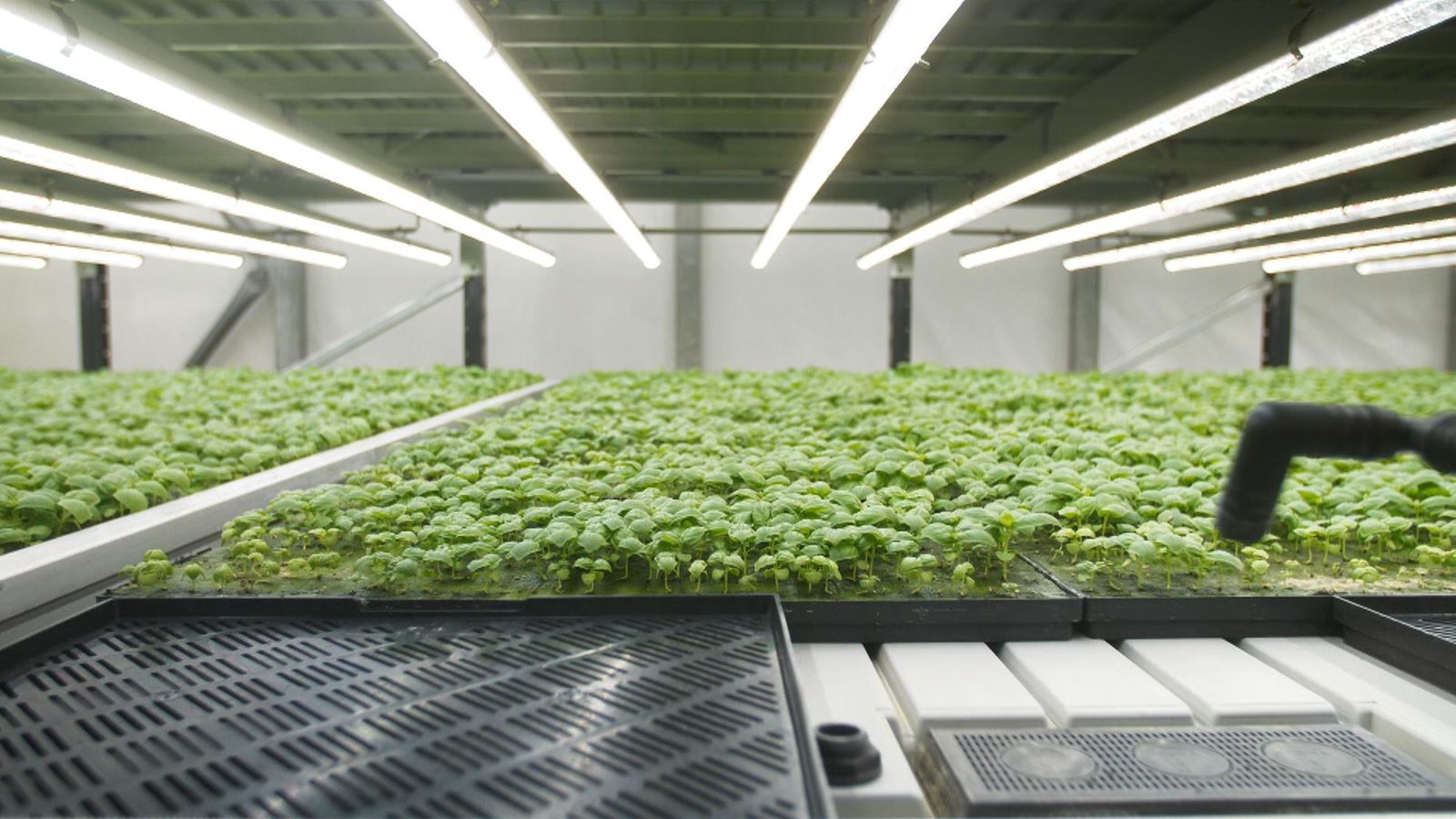
Here at Farm 2, you come across row upon row of trays, stacked on top of one another, each one loaded with progressively leafier basil plants. They are located beneath thousands of tiny LED lights, each one carefully adjusted to the precise frequency of spectrum that best fosters rapid growth in the plants.
Mr Fischer says: “We’re on this downward trend of declining costs for LEDs. And when you consider other key inputs, energy – and particularly renewable energy – is consistently decreasing as well.”
I think about the key factors driving vertical farming, and it appears they’re decreasing, whereas in comparison to fully-grown crops, all costs – fertiliser costs, rent, and water prices – are increasing.
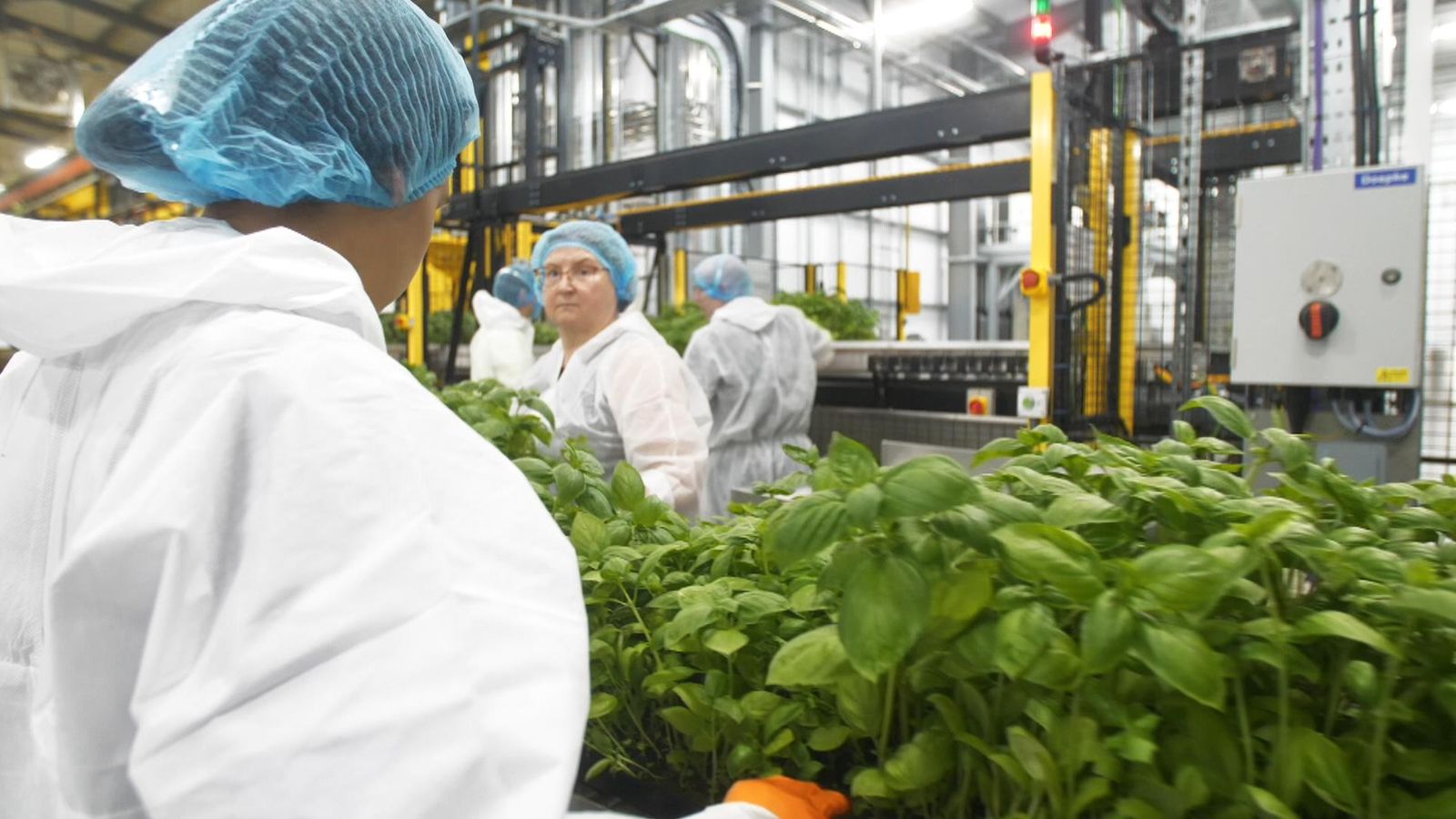
This farm, which currently sells to restaurants instead of directly to customers, is now as cheap as basil imported from the Mediterranean and North Africa, which is often flown in rather than shipped. The level of greenhouse gas emissions is significantly lower as well.
And our long-term ambition is to make it significantly cheaper,” says Mr Fischer. “If you look at Farm 1, we spent approximately £2.5m on lighting in 2018. Fast forward to Farm 2; it’s seven and a half times larger and in those three years the lighting cost was roughly half the price. We’re also probably using 60 to 70 per cent less power.
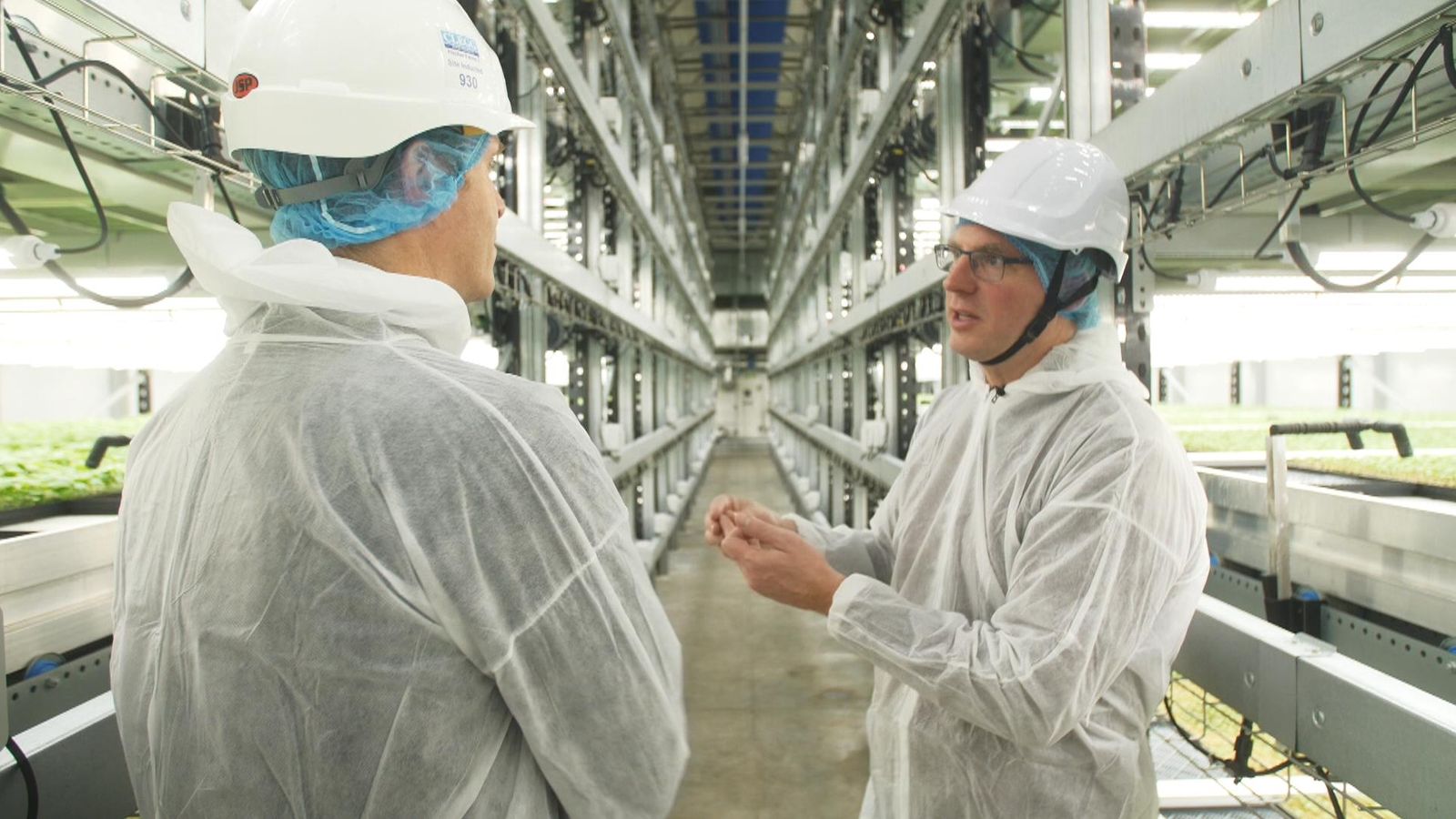
It might seem a bit strange to hear a farmer devote so much time to talking about energy and relatively less about all the usual things you’d expect – the soil or farming equipment or the weather – but vertical farming is essentially an energy business. If energy costs are sufficiently low, it makes growing these crops here substantially cheaper.
Here in the UK, with power bills being among the highest in the developed world, this business has a tougher outlook. Nevertheless, Mr Fischer aims to demonstrate its viability here first before expanding operations to countries with lower energy costs.
In a similar manner to how Dutch growers have held a leading position in those greenhouses, he believes the UK has an opportunity to establish its supremacy in this emerging agricultural sector.


