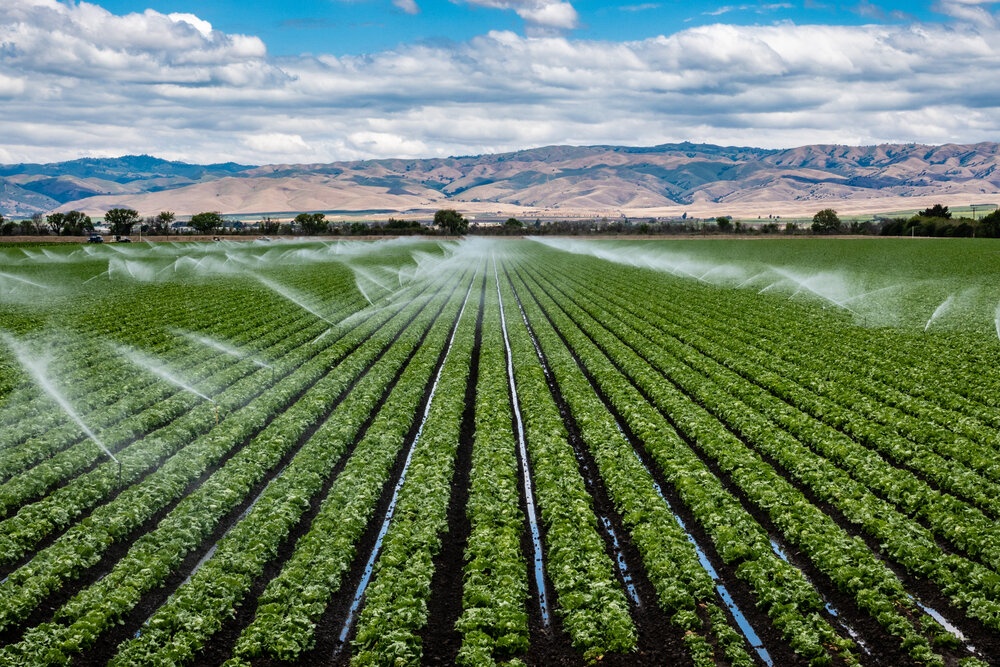
This year’s dry-season operations are starting slowly because many farmers appear lethargic in engaging in the process due to the current drop in prices of some food items, including rice, maize, and wheat, production costs, inputs, and other related expenses.
During this period in 2023, a large number of farmers left their communities to seek out irrigation land for dry-season production because prices of grains were attractive, Weekend Trust reports.
However, following the recent drop in prices of grains, particularly rice, maize, and wheat, which are the main crops for the dry season (apart from vegetables), farmers lost a significant portion of their investments. Many farmers who spoke to Weekend Trust said they are not encouraged by the current development and will either shun farming this season or do it on a very small scale.
This is even as the Minister of State for Agriculture and Security, Dr. Aliyu Sabi Abdullahi, said recently that the government is implementing a dry-season programme that targets 500,000 hectares of land. ‘We are implementing a dry-season initiative for all-year-round farming on 500,000 hectares. The first phase started with a focus on wheat in 15 wheat-producing states. The second phase covers rice, maize, and cassava,’ he said.
Nigeria currently uses less than half of the 3.1 million hectares that could be used for irrigated production.
At the moment in Nigeria, the wet season dominates agricultural production, which restricts farmers’ yearly output despite many dams, irrigation sites, and river basins.
Nigeria has a total of 408 dams consisting of 142 large dams, 59 medium dams, and 207 small dams, making it the country with the highest number of dams in Africa, according to the Compendium of Irrigation Schemes in Nigeria.
The country also has 12 river basin development authorities with a potential of 154,000 hectares of irrigable land, but many of these areas will see little activity this season if support is not provided to farmers, Weekend Trust gathered.
Irrigation farming under threat
Dry-season rice, wheat production
Farmers who produced rice, maize, and wheat last year are currently licking their wounds following the loss of millions of naira due to a sharp drop in grains’ prices hinged on a federal government policy which allowed the importation of sorghum, brown rice, wheat, and maize.
Our correspondents in Kano and Jigawa states reported that many of them are still haunted by their wet-season experiences.
In previous years, this period was marked by activities such as land clearance, input purchases, water channel maintenance, and seed scouting.
This year, however, things seem to be different because a lot of farmers do not appear enthusiastic about returning to the farms.
The revenues from the wet-season crops are typically used by many farmers to finance their dry-season operations. However, Weekend Trust learnt that this time around, commercial farmers are unwilling to do so because of the steep decline in commodity prices.
Alhaji Sani Usman Kutama, a farmer who used to produce over 300 bags of maize annually in the past, stated that he had to sell 80 bags of maize at N25, 000 per 100kg to raise two million naira for the dry-season farming.
‘Many people are in a state of quandary because they incurred heavy losses during the wet season. To make matters worse, the price of farm produce keeps going down while the cost of inputs keeps rising. I had to sell 80 bags of maize to raise two million naira. But farming is all we have, and that is why people like me are trying to return to the farm. I can tell you that many farmers will not cultivate their fields this dry season, and you know what that means for the nation’s food security,’ he said.
A visit to the Bagwai irrigation site revealed vast stretches of farmland that should have been cultivated already, lying bushy, with no sign of activity. Some areas known for producing onions, tomatoes, and wheat are also yet to be attended to by farmers.
According to Malam Maikano Fayamfayam, many farmers are still counting their losses from the wet season, and returning to the farm for dry-season activities requires careful calculation.
‘Even if you want to take part in dry-season farming, where do you get the money? We are only trying to survive with the little we are making from the wet-season harvest. Most of us couldn’t take our produce to the market because of the unfavourable prices. At a time when a bag of fertilizer is going for over N60, 000, how do we finance the dry season?’ he asked.
He explained that the current situation in the agriculture sector is pushing many smallholder farmers out of production and weakening what he called the backbone of the nation’s food supply chain.
Alhaji Shehu Bello Garun Malam, a wheat farmer, said that despite Nigeria’s declining wheat production in recent years, the situation may worsen as the crop’s planting calendar begins.
He added that many wheat farmers are sceptical about engaging in the activity this season.
‘Many of those who have mobilised to farm are those who have arrangements with seed companies, but individual farmers are still weighing the risks. The bitter truth is that farming has become a risky business, as you will invest your huge resources and fail to recover them. If you go around this area, you will see that even though some of us have planted wheat, many fields remain uncultivated due to fear of the unknown,’ he said.
An onion farmer, Malam Abba Musa, said people in his group suffered heavy losses last season.
‘The prices of fuel, fertilizer, and seeds have all gone up. Farmers have been facing serious challenges and are farming at a loss. Take, for example, those who produced pepper during the wet season; I am sure you would pity them. We (onion farmers) also had a terrible experience with seeds last year. Honestly, farmers are in a dilemma that needs urgent attention,’ he said.
Taraba
In Taraba State, our correspondent said many farmers have abandoned their irrigation farms due to losses. In the past, Weekend Trust gathered that people travelled from other parts of the country to Taraba to engage in dry-season farming.
Mallam Yakubu Adamu, who has been involved in irrigation farming in the Mutum area of Gassol Local Government Area of the state for many years, told our correspondent that he invested over five million naira in his rice farm but only harvested 50 bags of paddy, and the price of paddy rice per bag is now between N18, 000 and N20,000.
Adamu said the situation was further worsened by the fact that rice farmers across Lau, Karim-Lamido, and Gassol Local Government Areas witnessed poor harvests as a result of the early cessation of rainfall.
He stated that farmers in these three local government areas are battling the challenges of poor harvest and poor paddy price.
Rabiu Zailani, a large-scale farmer, told Weekend Trust that he would not embark on irrigation farming this season because of the losses he encountered after harvest.
He said he has been into dry-season farming for the past 20 years, but his last experience was not encouraging.
He lamented the high cost of farm inputs and cost of labour, saying, ‘It is not going to be possible for farmers to recover their investments if they venture into irrigation farming because of the poor price of farm produce on one hand and the high cost of inputs on the other hand.’
Zailani said the government made a wrong decision by allowing importation, saying instead, it should have considered what he termed a buy-back policy or provided a minimum price template to encourage farmers to continue production.
Engineer Yahaya Mafindi, a farmer in the Sheka area of Gassol Local Government of the state, said irrigation farming this time around amounts to waste of resources.
‘The price of farm produce is very low while the cost of farm inputs is very high and the government is not doing anything about that. So, the best thing for farmers is to stay away from farming, and if necessary, one should only produce what he and his family will consume,’ he said.
Findings revealed that there is a drop in the number of people who travel to embark on irrigation farming along the River Benue valley in Ardo-Kola, Gassol, Bali, Ibi, and Karim-Lamido Local Government Areas.
Weekend Trust gathered that most of the locals and visitors who troop to the Benue valley during this period annually are no longer being seen around the irrigation fields. It was learnt that only a few people have started planting rice seeds in some irrigation fields in the valley.
Mr. Dauda John, a civil servant, told Weekend Trust that despite the crash, he will not abandon farming because ‘one has to take risk before succeeding in life.’
Like Taraba, like Kebbi
The situation in Kebbi State is similar to what is happening in Taraba State. Weekend Trust gathered that there is a drop in the number of farmers who have started engaging in dry-season farming activities.
Alhaji Lawali Usman, who is a popular rice farmer at Makera and Dukku Fadama areas of Birnin Kebbi, said many farmers may not participate in this year’s dry-season farming.
‘Last year, many farmers had to wait for the wet season to engage in rice farming. They could not do dry-season farming because all the necessary inputs, such as the petrol-propelled pumping machines and other necessary inputs like fertilizer and pesticides were beyond what they could afford,’ he said.
Malam Yakubu Ibrahim, who is also a rice farmer in Argungu area of the state, said the drop in price of rice has reduced the patronage from the rice milling companies in the state.
‘The rice millers are our strength, but they are no longer willing to buy paddy from us. Last year, we were almost begging them to buy paddy from us. The millers who were coming to meet us at the farms, lobbying us to sell to them during harvest, no longer chase after us; we are the ones taking our harvested rice to lobby them for purchase. I don’t blame them; the drop in price of rice is affecting their sales. They no longer have the desire to buy in large quantities again. We are in a dilemma now; we don’t know where else to take our paddy to,’ he said.
A member of the Rice Farmers Association, Sanusi Augie, while speaking to our correspondent, said, ‘It’s obvious that many of our members may not engage in the dry-season farming because of the prevailing situation. The drop in price of food items, the high cost of farm inputs, coupled with less patronage from the millers, is discouraging.
‘The number of farmers going into dry-season farming keeps dropping. Last year, fewer than 30,000 farmers engaged in dry-season rice farming in the state.
‘During the period of Anchor Borrowers, some years back, we had over 700,000 farmers engaging in dry-season rice farming. But with the removal of the fuel subsidy and other accompanying factors, not many farmers can cope with the situation. Years back, many farmers in the state preferred to engage in dry-season farming. They cultivated rice three times a year, but today, the story has changed. Government efforts in the provision of motorised power tillers, CNG and solar irrigation pumps, and fertilizers to encourage farmers’ participation in dry-season farming have not changed the situation. More so, many of our members who were actively farming in the state can no longer do so because of the attacks by bandits and members of the Lakurawa terror group,’ he said.
Niger too
Weekend Trust gathered that the situation is the same in Niger State as farmers lament that the venture is no longer profitable due to falling prices of farm produce.
Alhaji Mahmud Bala Egge, Secretary of the All Farmers Association in Wushishi Local Government Area of the state, told our correspondent that only a few of the farmers who engaged in the practice last year are doing so this year.
‘As I speak with you, next week I will start transplanting rice. It is 15 days since I did the nursery beds. Because of the fall in the price of farm produce, I am only cultivating one hectare of land this year instead of 15 hectares that I did last year. Last year, I cultivated 15 hectares during the irrigation season, but this year, I have reduced it to just one hectare, which I can easily manage.
‘First, prices of farm produce have dropped seriously. We are buying farm inputs, especially fertilizer, at a high cost, and prices of farm produce have continued to fall. So, we are at a loss.
‘Secondly, there was a shortage of rainfall this year, and it has affected the water bodies we always rely on for irrigation farming. Farmers would find it difficult to water their plants this dry season.
‘Thirdly, the issue of insecurity has contributed significantly,’ he said.
He added, ‘There is no way farmers can buy inputs that are of high cost with the current prices of farm produce. As I speak with you, Urea is N45,000 per bag. The government should buy and sell to us at N20,000, and it should be accessible to real farmers. Many of us will go back to the farm. Right now, a bag of paddy is N23,000 in some markets. So, if you buy Urea at the cost of N45,000 and NPK at the cost of N50,000, it won’t work that way.
‘Last year, the Niger State government, through Niger Foods, gave us farm inputs as loans. I was a cluster leader for Mailema Farmers Association. I controlled 115 hectares of rice farm through Niger Foods, and we paid back the loan successfully. They bought the rice from us at good prices. If the government can do that, I assure you that farmers would be happy. However, whatever support from the government must go directly to the real farmers, not those who would collect and resell,’ he said.
In Lavun LGA, another farmer, Aliyu Mohammed, told Weekend Trust that most farmers have shown little interest in irrigation farming this year.
‘By this time last year, many farmers had gone far with planting, but many people have not started this year due to two major reasons. The water body we use every year has almost dried up because of the lack of rain this year. The second issue is the drop in the prices of farm produce. Many of us are afraid of investing in irrigation farming because the practice is capital-intensive, and with the current prices of farm produce, you will hardly get back your investment.
‘This year, a bag of paddy is sold for N24,000 and N25,000. Many farmers did not get back what they invested during the rainy-season farming because of the high cost of fertilizer and low prices of farm produce. If prices of farm inputs do not drop, it will affect farming, especially rice,’ he explained.
Similarly, in Katcha LGA, a major rice-producing area in Niger State, Weekend Trust gathered that most of the visiting farmers from Sokoto, Kebbi, and other North West and North East states, who usually arrive early for irrigation farming, have yet to come this year.
‘I just came back from my farm. Though the majority are discouraged with the current situation, those of us who use solar-powered water pumping machines still find it easier than those who still use petrol-powered water pumping machines because of the cost of fuel.
‘Though I have planted my rice, I am afraid of sustaining the farming because of the cost of fertilizer. We are feeling the pain because the price of rice has continued to fall. Sincerely speaking, many farmers have not shown interest in irrigation farming this year. Last year, at this time, almost all the farmlands had been cultivated. But this year, many farmlands have been left uncultivated. Even some farmers who usually come from Kebbi, Sokoto, and other states to do irrigation farming here have not come this year, which is quite surprising,’ he said.
In Gbako LGA, another farmer, Tauheed Dwale, told Weekend Trust that he has not decided on whether to cultivate or not.
‘Irrigation farming is capital-intensive because you need to apply fertilizer between three and four times. Aside from the cost of fertilizer, you need to pay for labour and also buy chemicals. Last dry season and rainy season, we lost our investments. Personally, I cannot engage in irrigation farming this year,’ he said.
Provided by SyndiGate Media Inc. (Syndigate.info).