Impact of Regional Conflict on Air Travel and Local Businesses
The ongoing conflict between the United States, Israel, and Iran has led to significant disruptions in air travel between Nigeria and the Middle East. As a result, international airlines operating these routes are facing substantial financial losses, with some estimates suggesting billions of naira in damages.
Financial Losses for Major Airlines
Airlines such as Emirates and Qatar Airways have been particularly affected. Both carriers were scheduled to operate high-capacity flights from Nigeria to key Middle Eastern hubs like Doha and the United Arab Emirates. However, due to airspace closures triggered by the escalating tensions, their operations have been halted.
Emirates was set to deploy its Boeing 777-300ER, which can carry up to 360 passengers, while Qatar Airways planned to use its Boeing 787-800, capable of carrying 250 passengers. Using conservative seating figures, it is estimated that at least 554 passengers would have departed Nigeria on a single rotation.
Fares for these flights vary significantly. Qatar Airways offers one-way tickets ranging from N1.3 million to N1.8 million, while Emirates charges between $1,380 and $2,395. Converting the lowest fare for Emirates using an exchange rate of $1 to N1,379, the cost per passenger comes to approximately N1,903,020.
With a capacity of 354 passengers, Emirates could have transported around 1,416 passengers between Saturday and Tuesday, generating roughly N2.69 billion for one-way trips and nearly N5.39 billion for round trips. Similarly, Qatar Airways, with a capacity of 210 passengers per flight, could have transported 840 passengers, potentially earning N1.09 billion for one-way trips and N2.18 billion for round trips.
Combined, both airlines are projected to have lost approximately N7.54 billion during this period.
Passenger Disruptions and Frustrations
Passengers have also been severely impacted by the sudden cancellations. Many arrived at the Lagos airport last Saturday with luggage, only to be informed that flights had been suspended due to the conflict. Some travelers had planned to connect through Middle Eastern hubs but were left stranded.
Dare Olanihun, a stranded passenger, shared his frustration over the disruption. He explained that the conflict had affected a crucial business engagement abroad. “If I had known war would break out, I would have travelled earlier,” he said. “This is a serious blow to me.”
Olanihun added that the delay initially seemed temporary, but as more information emerged, passengers were eventually asked to leave the airport. “This trip would have impacted my professional life greatly, but I can only pray that it is redeemable,” he concluded.
Broader Implications for the Region
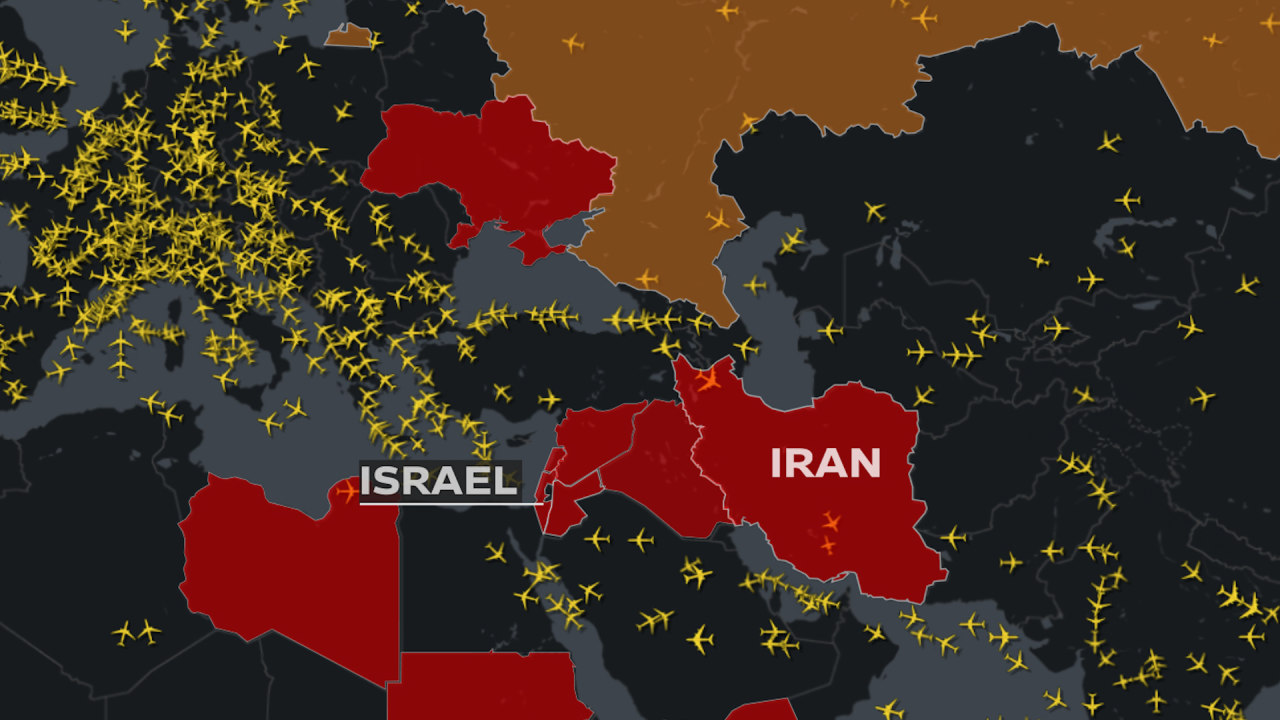
The aviation crisis has not only affected airlines and passengers but also had broader economic consequences. The closure of airspace across the Middle East has disrupted global travel, with several countries taking defensive measures. Syria closed parts of its southern airspace, Jordan conducted defensive drills, and Kuwait shut its airspace after intercepting incoming threats.
Russia’s air transport authority, Rosaviatsia, has also suspended commercial flights to Israel and Iran, further complicating travel plans.
The conflict began when the United States and Israel launched major combat operations against multiple locations in Iran, including Tehran. In response, Iran retaliated with missile strikes targeting northern Israel and U.S. military bases in the region.
Impact on Airport Caterers
The grounding of flights has also affected local businesses, particularly airport caterers. Following a directive from the Nigerian Minister of Aviation and Aerospace Development, Festus Keyamo, foreign airlines were required to use local caterers for outbound flights. This led to improved sales for many caterers.
However, the suspension of flights has reversed some of these gains. One caterer, who wished to remain anonymous, mentioned that she had to resell prepared meals locally after two airlines canceled their routes. “We are praying to God for his peace across the nations of the world,” she said.
Another caterer, Florence, expressed concerns about both her business and her personal life. Her child lives in one of the affected countries, and she has been fasting and praying since Sunday. “I know that my God will restore peace in the zones,” she said.