Escalating Debate Over Real Estate Policies
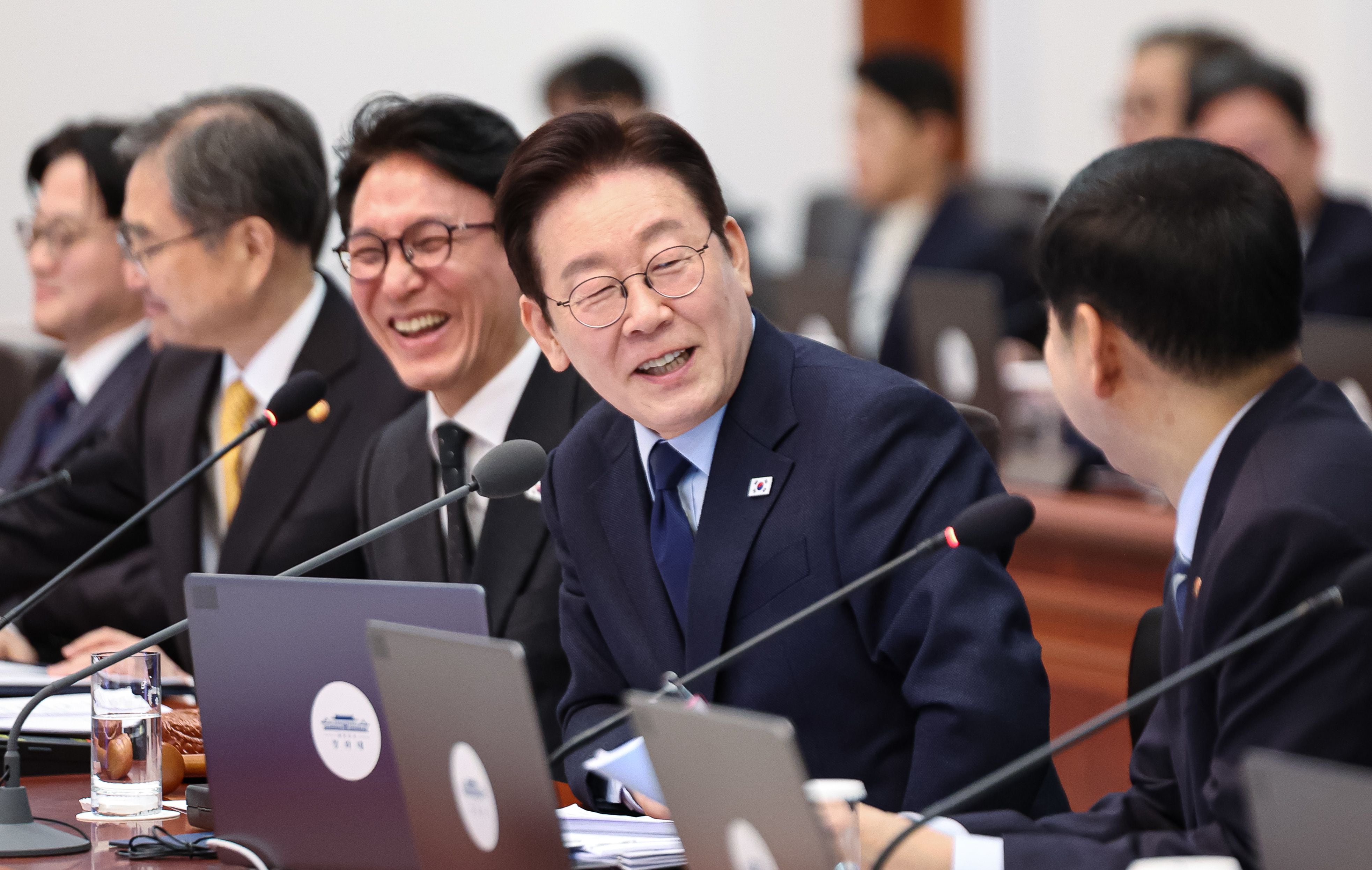
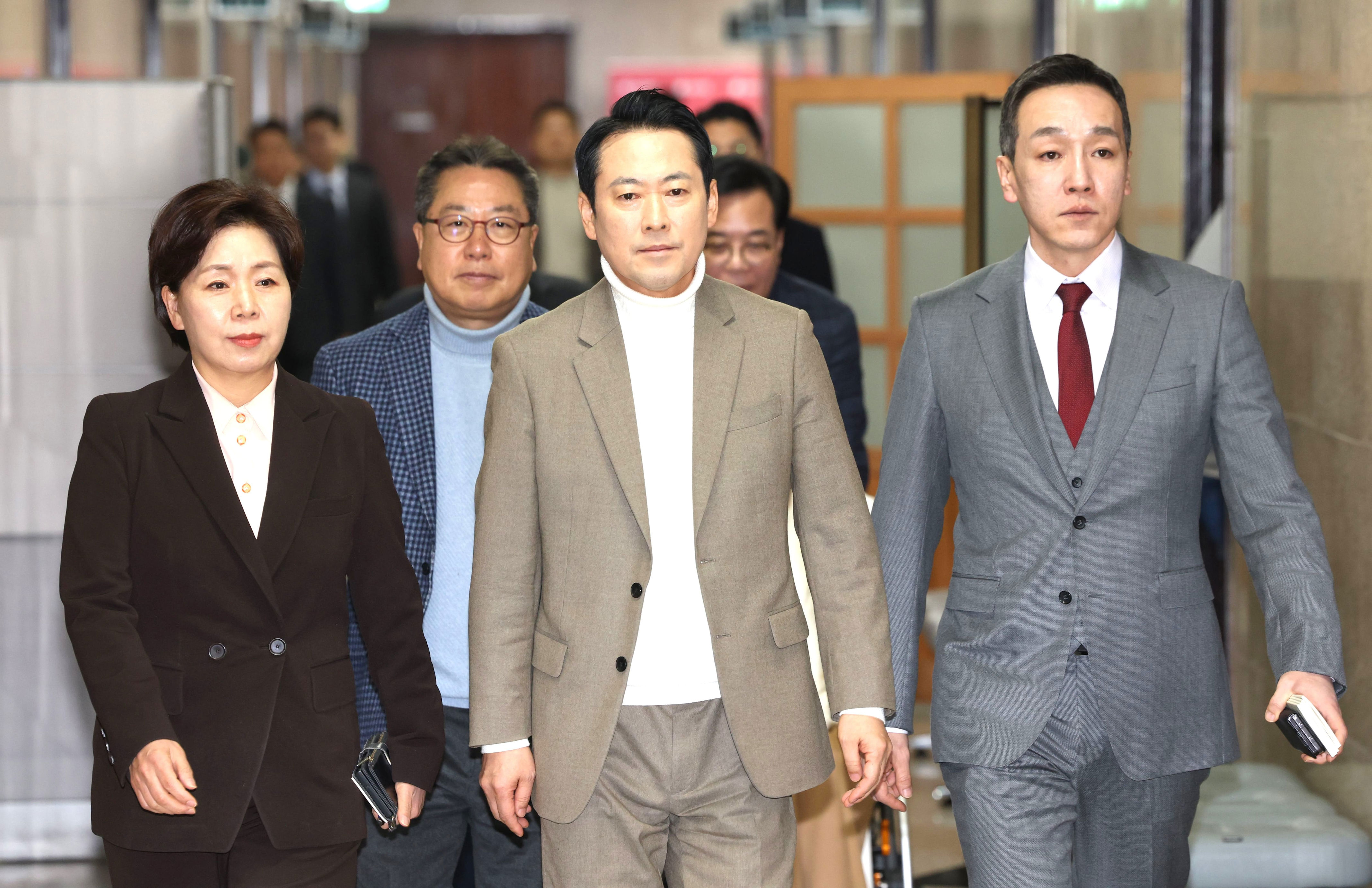
President Lee Jae Myung and People Power Party leader Jang Dong-hyeok engaged in a heated exchange during the recent Lunar New Year holiday, focusing on the president’s real estate policies. President Lee emphasized the need to regulate multiple homeowners on social media, while Jang criticized this approach, arguing that it unfairly pressures both multiple homeowners and the public. In response, President Lee highlighted his own ownership of only one home, which led Jang to point out that the president holds onto a “Bundang reconstruction lottery” expected to yield 5 billion won in capital gains after his term. This dispute highlights the tension between a single high-value property with significant potential gains and multiple homes with a combined assessed value of 850 million won.
Despite the debate, political circles have downplayed it as mere rhetoric. However, economic experts argue that it reveals critical flaws in President Lee’s real estate policies. They highlight several key issues: first, measures targeting high-value single homes must precede or accompany policies for multiple homeowners to stabilize housing prices. Second, the government should overhaul property taxes immediately, considering upcoming tax bill deadlines, but is delaying due to election concerns. Third, President Lee’s social media pressure on multiple homeowners has caused market uncertainty, with buyers postponing contracts amid unresolved policies. Fourth, last year’s rushed delay of heavy taxes on multiple homeowners exacerbated this year’s chaos. Fifth, the government is shifting blame for policy failures onto multiple homeowners. Finally, President Lee avoids addressing policies tied to his personal interests while attacking opposition leaders demanding systemic alternatives, misleading the public.
President Lee Jae Myung’s Housing Policy Goals
President Lee’s housing stabilization policy aims to shift real estate from an investment or speculative asset to a residential consumption good. Economists describe this as transforming housing from a “production good” (where value increases over time) to a “consumption good” (where value decreases with use). Clothing, food, and housing are essential consumption goods. While clothing and food are classic consumption goods that lose value when used, housing retains aspects of a production good in some areas due to land value appreciation. Why?
Housing comprises buildings and land. Buildings depreciate over time, but land value remains perpetual. During redevelopment, land acts as a production input, generating new value. For example, an apartment purchased 40 years ago for 1 billion won (500 million won land, 500 million won building) now valued at 4 billion won reflects zero building value (fully depreciated) and 4 billion won land value—a 3.5 billion won increase.
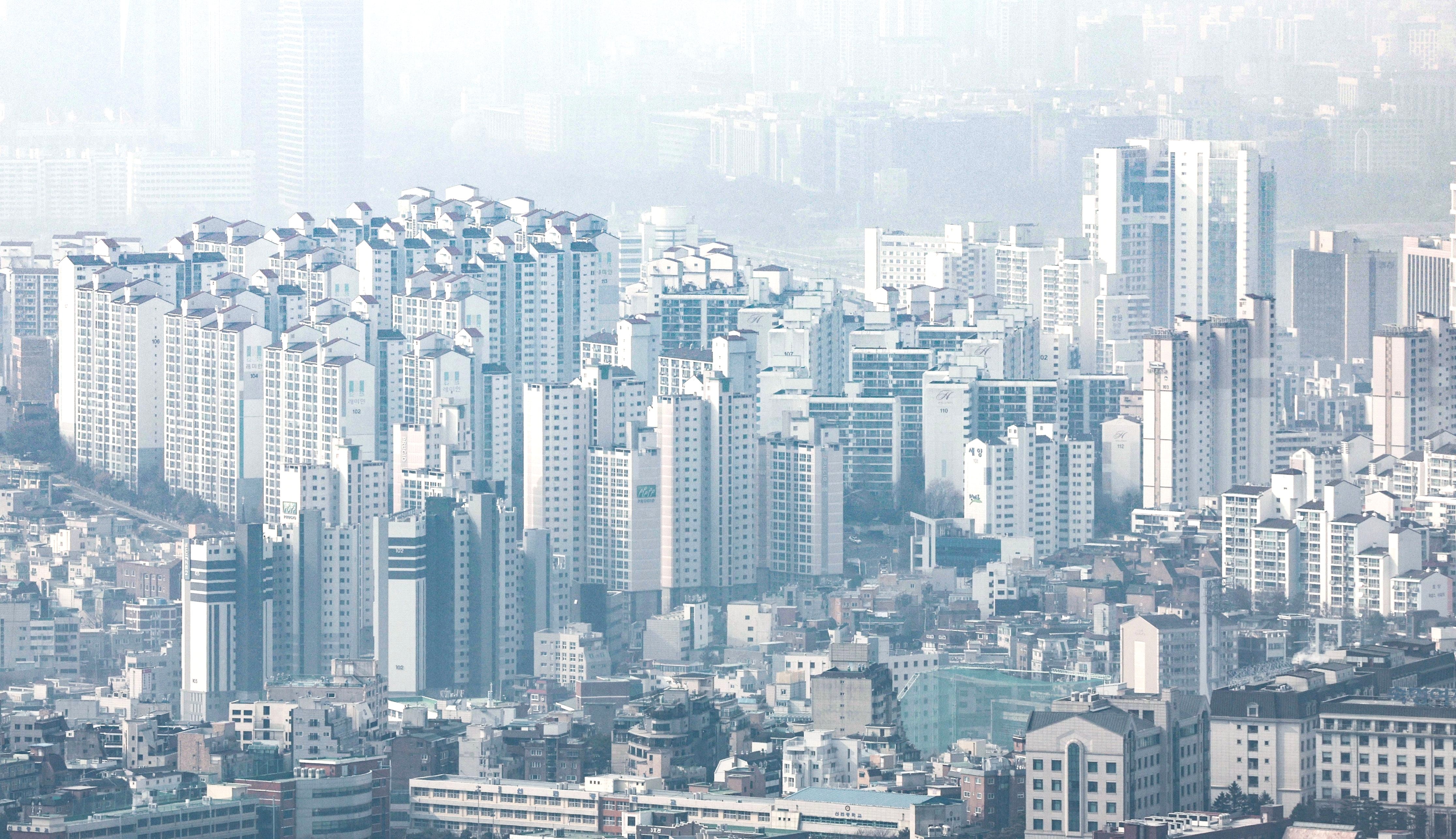
To eliminate housing’s investment demand and transition it to a consumption good, President Lee must use supply-demand policies to reduce long-term land price increases to zero. This would mean high-end homeowners face greater wealth reduction due to building depreciation, while low-end owners see less reduction. Experts argue this disparity is fair, as government investments in infrastructure (roads, subways, libraries) already inflate property values in developed areas. President Lee envisions a policy shift: stabilizing housing prices to reduce wealth gaps and replacing real estate with pensions as retirement security, reversing decades of reliance on housing as workers’ sole retirement plan.
How Much Should Housing Prices Fall?
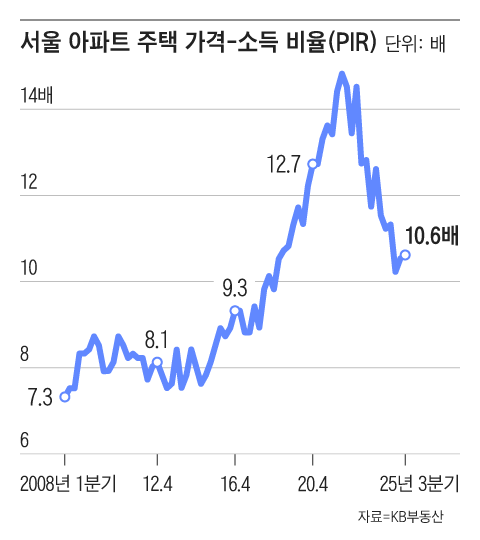
President Lee has not specified target price levels. However, experts cite the Price-to-Income Ratio (PIR) as a key metric. Even if prices rise, higher incomes can stabilize the market. According to KB Real Estate data, Seoul’s PIR was 10.6 in Q3 2025, meaning a median-income couple would need 10.6 years of savings to buy a median-priced apartment. During Lee Myung-bak’s tenure (when prices were stable), the PIR was 7.5. To match this, prices must fall by 30%: a 3-billion-won apartment to 2.1 billion won, a 30-billion-won apartment to 21 billion won. Some argue high-end prices need a 40% drop, given their outsized impact on market trends.
A more aggressive benchmark comes from the IMF, which recommended a PIR of 5 for Korea, given its reliance on human capital. Under this, a 3-billion-won apartment would drop to 1.4 billion won, a 30-billion-won apartment to 14 billion won. This daunting task confronts President Lee.
Policy Flaws Exposed in the Debate
Experts identify six issues in President Lee’s policies:
- Focus on Multiple Homeowners Over Systemic Reform: Multiple homeowners account for only 14% of Seoul’s housing owners (372,000 out of 2.66 million). The main driver of price increases is high-value single homes in Gangnam, fueled by low property taxes and tax exemptions. Targeting multiple homeowners alone fails, as they sell non-Gangnam properties first, while Gangnam buyers reinvest stock gains into real estate.
- Unclear Tax Reforms for Single Homeowners: President Lee revived Moon Jae-in’s heavy capital gains taxes and Roh Moo-hyun’s mortgage recall plans but has not proposed reforms for single-homeowner taxes or capital gains. This uncertainty causes hesitation among sellers. A Gangnam resident noted, “Selling now risks massive losses if prices rebound.”
- Ineffective Supply Policies: Last September’s supply measures lacked impact. Experts argue reviving capital gains taxes earlier would have increased listings. Delaying these measures until after land transaction permit zones were expanded worsened market chaos. Past presidents gave 6–12 months’ notice for policy changes, but President Lee’s rushed timeline caused confusion.
- Misplaced Priorities and Blame-Shifting: President Lee focused on multiple homeowners and land transaction permits instead of high-value single homes. By attacking Jang Dong-hyeok—a critic of this approach—he avoided addressing his own stake in Gangnam policies.
- Unfair Stigmatization of Multiple Homeowners: Multiple homeowners acted rationally under existing policies. Labeling them “villains” ignores market dynamics; capital flows to high returns. Experts warn this approach undermines policy fairness and trust.
- Slow and Narrow Reforms: President Lee has limited time (2 years) before the 2028 elections. Tax reforms, critical for price stability, require implementation by May to affect this year’s bills. However, President Lee has remained silent, with experts predicting policy shifts post-June local elections. This delays reforms until 2024–2025, risking instability as lawmakers focus on the 2028 general election.
President Lee’s Challenges
Experts propose simultaneous measures: ①Expanding tenant protections to prevent tax transfers to renters; ②Capping lifetime capital gains exemptions for single homeowners at 200 million won; ③Gradually increasing property taxes to reduce speculative demand; ④Shortening the “temporary second home” exemption from 3 years to 3 months. While President Lee vows to tackle unearned real estate gains, homeowners remain skeptical due to slow, narrow actions. Markets now joke, “The biggest risk is the supreme leader’s mouth.”
월 5900원 멤버십, 신문 독자에게는 2900원, 조선멤버십
55000원 상당의 신문-잡지 8종 마음껏 보기, 조선멤버십
현금처럼 쓸 7000포인트 받아 알뜰한 쇼핑, 조선멤버십