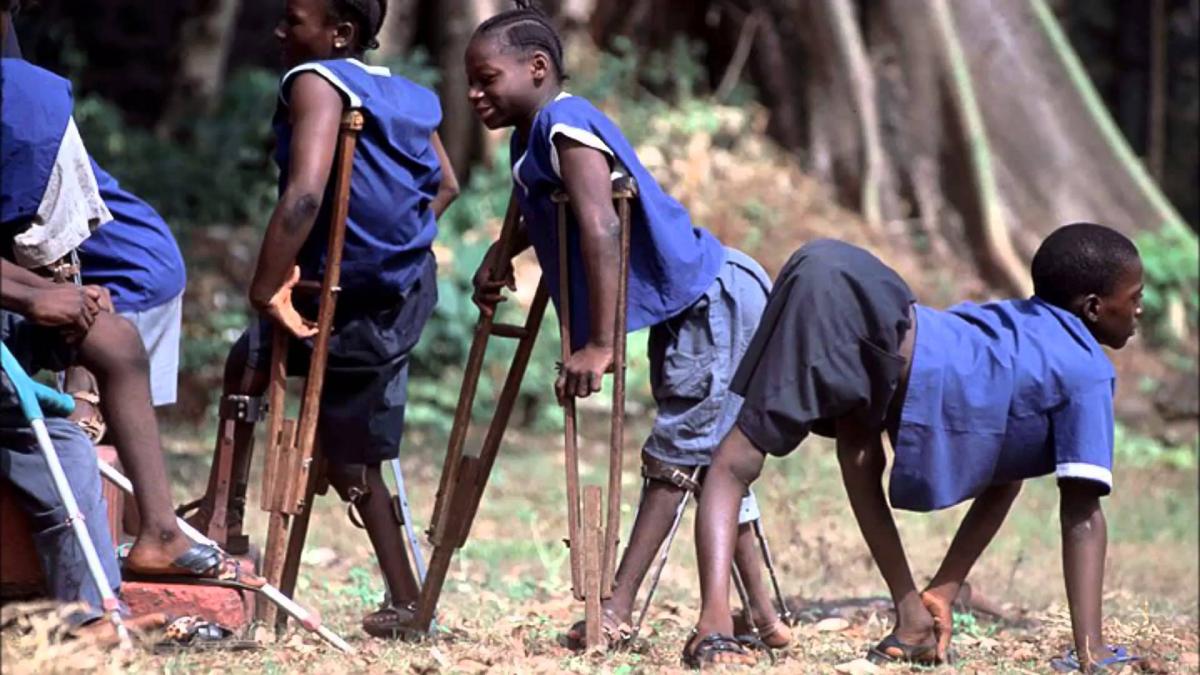
A Journey of Resilience and Hope
Victor Zinda was born in 1968 to a family of ten children, living in exile in Uganda. From the start, his life seemed normal, but it took a dramatic turn when he fell seriously ill as a baby. At around one year old, he contracted measles, and while still recovering, he was infected with polio. The disease left him permanently disabled, and by the time he was five or six years old, he was completely crippled.
An operation was performed in an attempt to restore his mobility, but it failed. His legs contracted again, and he returned to crawling. He moved on his hands, without shoes or sandals, which made life even more challenging. During the rainy season, he crawled through mud, and during sunny days, the hot soil burned his hands. Despite these hardships, the community around him often doubted his survival, with some advising his parents to prepare him for begging. However, his father remained determined to send him to school.
At about ten years old, when a local school opened offering only Primary One and Two, Zinda began his daily journey, crawling 30 to 60 minutes each way. “I would arrive sweating, rest a bit, then join the class, and coming back was the same,” he recalled. While the school experience was mixed—some students laughed at him or bullied him, others showed sympathy—his intelligence eventually earned him respect. Teachers noticed his academic potential, and over time, classmates sought his help. “I was smart in class, and that helped me gain friends. I could write well, and others asked me to help them,” he said.
Zinda credits his academic success and the unwavering support from his parents and siblings for keeping him in school despite the challenges. He completed his O-Level studies at St. Maria Goretti Senior Secondary School in Katende, then attended Makerere High School for A-Level. Later, he joined Nkumba College School, where he earned an advanced diploma in accounting.
In 1994, shortly after the Genocide against the Tutsi ended in Rwanda, Zinda returned with his family. “We came two months after the new government was sworn in,” he said. Despite his education, he faced repeated job rejections due to his disability. Some employers would say, “You can’t manage, our office has stairs,” while others simply ignored him.
After several years, he enrolled at Kigali Institute of Education, now the University of Rwanda, where he studied business administration from 2007 to 2011. Since graduating, he has worked at Faith Victorious Association, a local non-profit that supports communities in fighting poverty, improving health, protecting the environment, and promoting the rights of women and children. He has served there for 14 years as Head of Administration and Human Resources.
Zinda also faced rejection in his search for love, mostly because of his disability. His shy proposals, meant to reassure, often made things more difficult. In 2006, a pastor who was also disabled gave him a wheelchair and shared his own story, encouraging him to stay hopeful and not to give up. Inspired by the pastor’s words, Zinda changed how he approached relationships. In 2007, he met the woman who eventually became his wife. They married in 2008 and now have four children.
Over the years, Zinda was often invited to share his testimony at churches and community events, about how he got married, completed university, and became a community leader. These experiences inspired him to write a book about his life titled, “The Tested Life of Unceasing Hope.” “I wanted people going through challenges like disability, unemployment, sickness, or depression to know they are not alone. I also went through depression and even considered suicide, but I thank God I didn’t.”
Zinda raises awareness about polio and disability rights. He encourages parents to vaccinate their children and urges communities not to mistreat people with disabilities, noting that even if it’s not polio, a child with a disability should be supported, not hidden or abused.
Polio Eradication Efforts in Rwanda
Rotary Club Rwanda, in partnership with the Ministry of Health, organized the annual Rotary Walk Against Polio 2025 on Sunday, October 19, during Car-Free Day in Kigali. The event aims to raise awareness about polio eradication. According to Dr. Alexis Muderevu, Chairperson of the Rotary Polio Plus Programme in Rwanda, the walk will start at BK Arena and proceed to Kigali Convention Center, showcasing the collective effort to eliminate polio.
This event is part of the observance of World Polio Day on October 24. During a media briefing on October 17 at the Kigali Public Library in Kacyiru, Dr. Muderevu explained that the polio virus spreads mainly due to poor hygiene. Once it enters the body, it affects the nervous system and can cause permanent paralysis. He listed some of the symptoms, including fever and headaches, and noted that there is no medication to cure the disease.
He added that while polio can be prevented through vaccination, it is also important to raise awareness about hygiene and sanitation. “Polio is an infectious disease that mostly affects children under five. It spreads through contaminated food and water, particularly in places with poor sanitation and low immunisation coverage.”
Polio once caused widespread disability in Rwanda, but the introduction of the Oral Polio Vaccine in the 1980s and strong national immunization campaigns led to the last wild poliovirus case in 1993, said Rotarian Alefe Meresa, polio data expert. He added that Rwanda was certified polio-free in 2004 and has since maintained over 95% vaccination coverage. In 2023, the country vaccinated 2.7 million children under seven in response to regional outbreaks.
Julie Mutoni, Vice President of the Rotary Club Kigali Golf, noted that if Rwanda lets its guard down, polio could return. She said they are working with the Ministry of Health and partners to keep awareness high and efforts ongoing. In Rwanda, every baby gets vaccinated against polio as part of the national immunization programme, and the country keeps a close watch through consistent surveillance to detect and stop any cases early.


