The Rise of Discord in Nepal’s Political Landscape
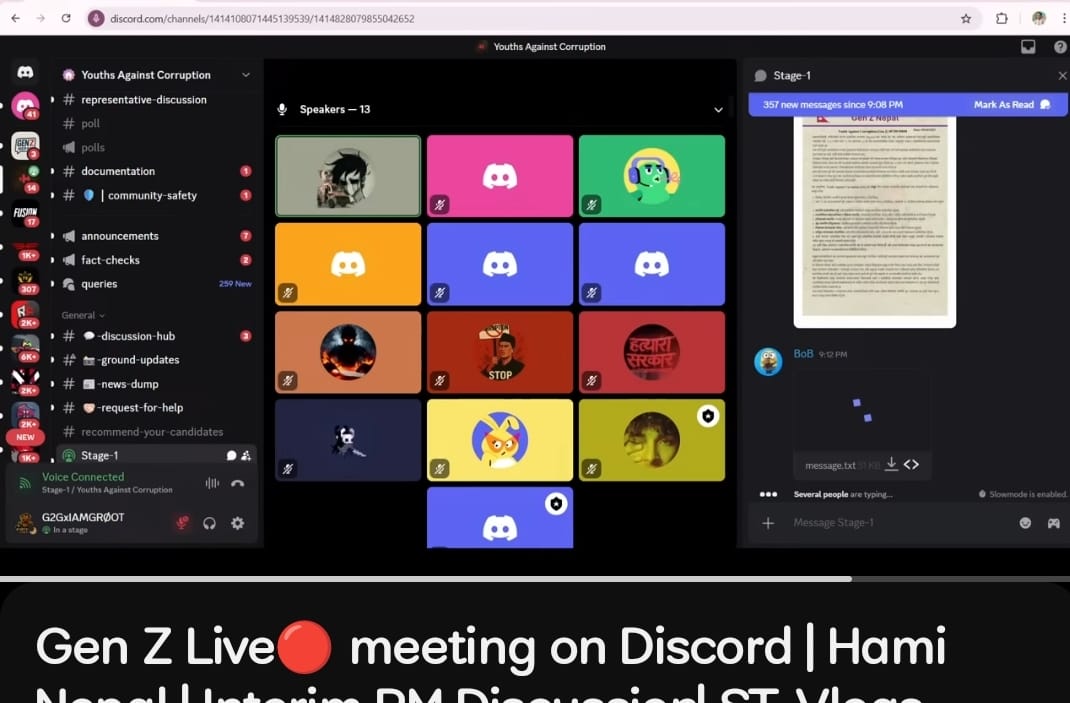
Discord, a social media platform primarily known for its use among gamers, has taken on a new and unexpected role in Nepal. Initially marketed as a space for “talk, play, and hang out,” the platform has become a central hub for political discourse and decision-making during the recent Gen Z-led protests.
In early September, as Nepal witnessed an uprising led by young people, Discord transformed into a powerful tool for communication and organization. Unlike traditional gaming communities, many users on the platform were not avid gamers but rather individuals deeply concerned about their country’s future. This shift marked a significant departure from the platform’s original purpose and attracted widespread attention.
As the protests gained momentum, Discord became a focal point for discussions about the nation’s political direction. Parents began asking their children about the platform, while older generations expressed confusion over the sudden prominence of Gen Z in public affairs. Memes such as “I was explaining Discord to my parents” or “My dad asked if Gen Z is voting via Discord, what is this?” became common across social media, highlighting the cultural shift.
With Dashain approaching, there is growing anticipation about how Gen Z-ers will engage with family members during festivals. For the first time, they may be at the forefront of conversations about the Gen Z uprising and the role of Discord in shaping political outcomes.
A Platform Beyond Gaming
Medhavi Shrestha, a long-time Discord user and journalism student, recalls her initial surprise when she learned that discussions about Nepal’s future were happening on the platform. She found it “absurd” at first, but the unexpected transformation of Discord into a political forum caught global attention.
Media outlets such as The New York Times and Al Jazeera have highlighted the role of Discord in Nepal’s political developments, with some even stating that “The Parliament of Nepal right now is Discord.” However, Gen Z-ers emphasize that the narrative surrounding the platform is more nuanced than it appears.
Tanuja Pandey, an active participant in the Gen Z movement, argues that while Discord played a role in gauging public sentiment, it was not the sole driver of the uprising. She points out that the movement was multi-platform, involving Facebook, Instagram, Reddit, and other platforms. “Claiming the PM was chosen only through Discord is an overstatement,” she said.
How Discord Became a Political Hub
Following the collapse of KP Sharma Oli’s government, a power vacuum emerged, leading to negotiations involving the army and Gen Z representatives. The Youth Against Corruption server on Discord, which had over 160,000 members, became a central hub for debates and leadership votes for the interim government.
Discord sessions were livestreamed on YouTube, drawing both praise and criticism. While some saw the involvement of Gen Z as a sign of hope, others questioned the competence of the participants. Many observed chaos, noting that Gen Z-ers seemed unsure of the way forward, often overwhelmed and engaged in internal disputes.
Despite these challenges, a consensus was reached around former Chief Justice Sushila Karki, who was appointed as Nepal’s 42nd prime minister after receiving the highest number of votes in an open Discord poll.
Concerns and Reflections
Gen Z-ers have mixed feelings about the role of Discord in the political process. Aditya Khare, a participant in the Hami Nepal Discord server, noted that while polls made people feel heard, the conversations themselves were less inclusive. He pointed out that moderators often controlled who could speak, limiting broader participation.
Khare also raised concerns about the reliability of the polls, citing the anonymous nature of the platform and the possibility of multiple votes. Without official data, verifying genuine participation remains challenging.
Shrestha emphasized that portraying the movement as simply “Gen Z choosing their prime minister on Discord” stereotypes the generation as unserious. She argued that the appointment of Karki was a pragmatic choice amid a power vacuum, not solely based on a Discord poll.
The Broader Implications
While Karki’s popularity on Discord and other platforms was evident, her credibility, track record, and public backing ultimately secured her acceptance. Pandey cautioned against celebrating Discord as a symbol of electoral legitimacy, warning that such narratives could be dangerous in the future.
Digital safety expert Anil Raghuvansi highlighted the risks associated with the sudden surge in Discord’s popularity. He warned that users of all ages joining the platform without understanding its features or safety protocols could expose themselves to various threats, including hate speech, bullying, and privacy breaches.
As the role of Discord in Nepal’s political landscape continues to evolve, it serves as a reminder of the complex interplay between technology, youth activism, and democratic processes. While the platform has provided a new avenue for engagement, it also raises important questions about the reliability and implications of digital governance.


