
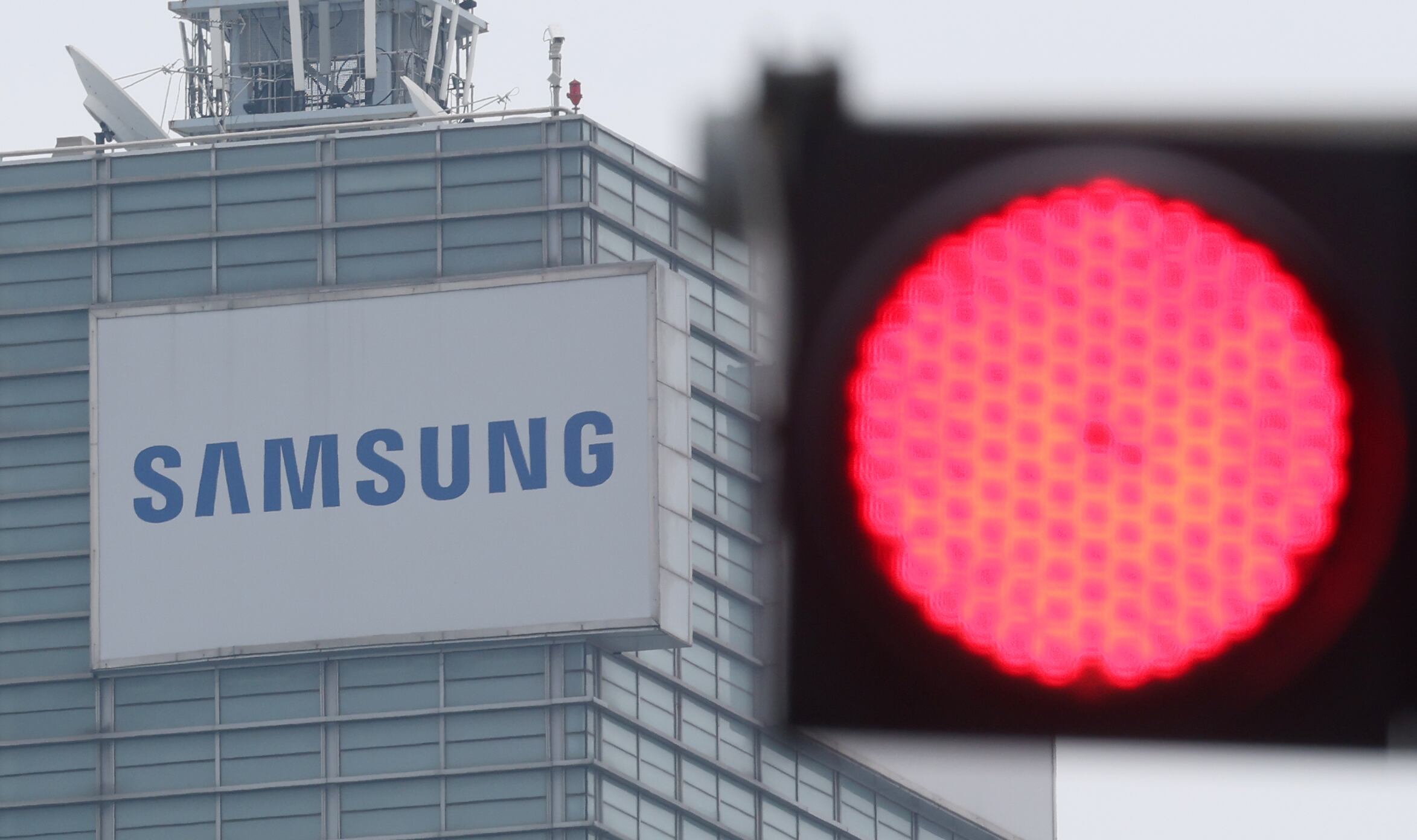
In terms of material achievements, what happened at Samsung Electronics and SK Hynix this time could be called a 21st-century “proletarian revolution.”
It is said that the property of the Romanov imperial family, which Russian revolutionaries seized after workers suffered mass casualties, would be worth 400 trillion Korean won in today’s money. Historians claim this figure is inflated by including various assets, but regardless, it remains the highest amount in revolutionary history. Yet, workers at the two Korean companies achieved a reward comparable to a revolution without shedding a single drop of blood—and even while some in the leadership enjoyed luxury vacations.
The performance-based bonus criteria secured by Samsung Electronics and SK Hynix workers are reportedly 10–12% of each company’s operating profit. Based on median estimates of the two companies’ operating profits projected by domestic and international investment firms, the total performance bonuses over three years amount to roughly 260 trillion Korean won. While this figure could decrease or increase depending on the semiconductor market, workers at both companies are said to have been promised this type of performance bonus for the next 10 years. It was not a hard-won struggle but a sheer windfall.
The scale is staggering beyond comprehension. SK Hynix’s net assets stood at 120 trillion Korean won as of the end of 2025. This represents the company’s true wealth after subtracting liabilities from assets. If the 260 trillion Korean won that workers at the two companies will receive over three years is combined with an appropriate level of debt, it could theoretically create two semiconductor companies with facilities equivalent to SK Hynix’s scale.
Money flowing to workers is not inherently bad. It stimulates consumption, expands domestic demand, and boosts the real estate market. Due to the performance bonus issue at the two companies, consumer goods stocks such as distribution, food, and cosmetics have already surged in the stock market. Since the amount each worker receives is equivalent to the price of a new apartment in the capital region, apartment prices along the routes of the two companies’ shuttle buses are reportedly skyrocketing. A new term, “셔세권” (shuttle bus proximity), has even emerged. From an opportunity cost perspective, this is the happiness of workers gained by sacrificing two SpaceX-class semiconductor companies.
A performance bonus of that scale could even change humanity’s future. SpaceX, a space company, is expected to raise 750 billion to 80 billion dollars through its upcoming U.S. stock market listing. This amounts to approximately 120 trillion Korean won. It is said to be the largest in global stock market history.
In its investment prospectus, SpaceX stated that the funds would be used to achieve three goals: commercializing the reusable giant launch vehicle “Starship,” establishing an economic ecosystem on the Moon using Starship, and developing Mars as a human settlement by using the Moon as a stepping stone. It added, “Our ultimate mission is to make humanity a multiplanetary species and expand the light of consciousness into interstellar space.” It sounds like something out of a Japanese anime.
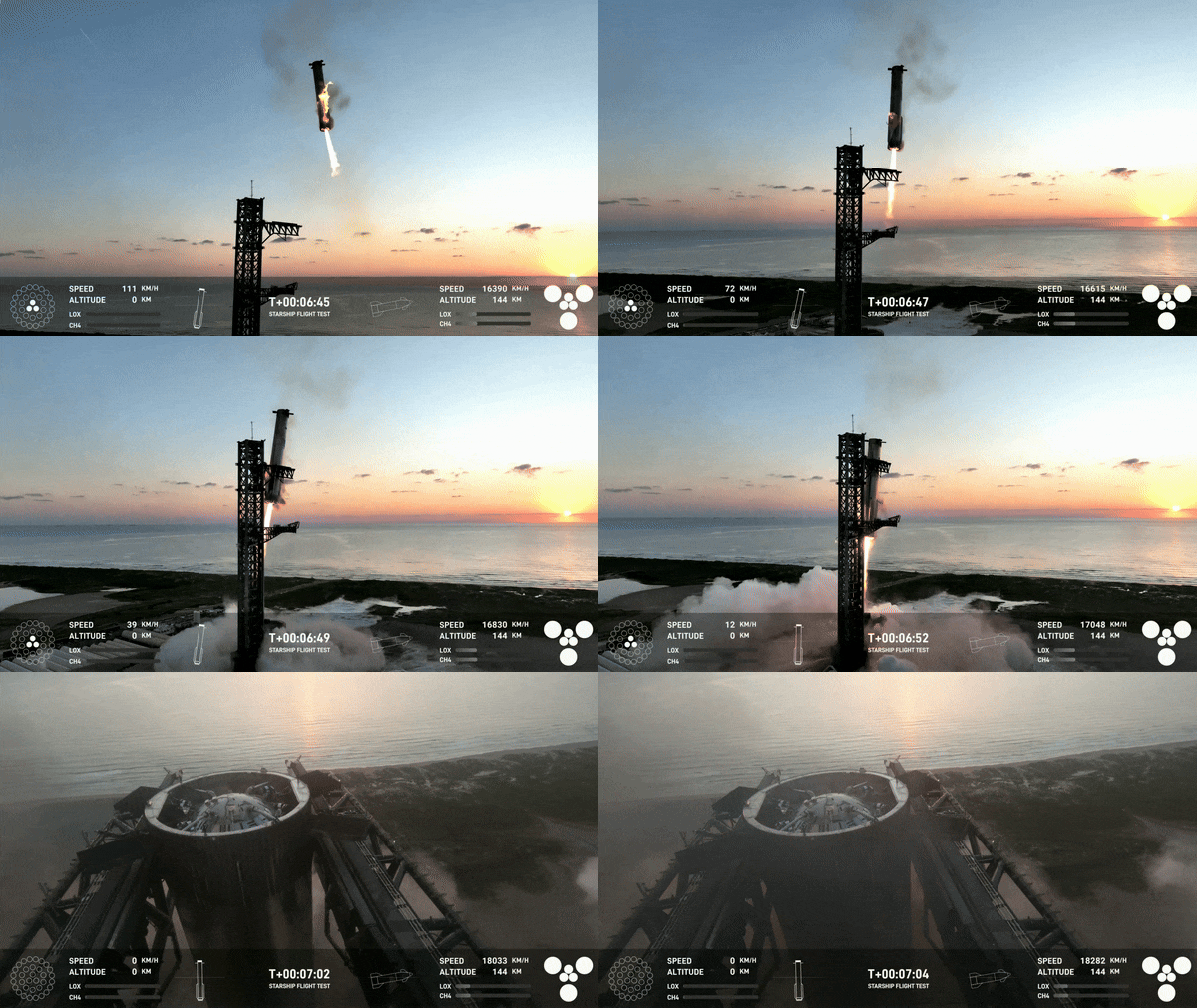
Some view Elon Musk’s claims as mere bravado. However, the 120-meter-tall, 5,000-ton Starship is actually soaring into the sky, and rocket towers are catching falling giant launch vehicles with so-called “chopstick” arms. That is why 120 trillion Korean won is flowing in. The performance bonus received by Samsung Electronics and SK Hynix workers could potentially spark a miracle that turns humanity into a “multiplanetary species.” From an opportunity cost perspective, South Korea has sacrificed two SpaceX-class companies.
No one would say such things if the government had distributed 260 trillion Korean won to the public. The political opportunity cost is different. The economic opportunity cost pursued by companies is a choice that creates more profit, jobs, and fulfills entrepreneurs’ dreams, like SpaceX. Therefore, a rational entrepreneur would not make such a choice—it is madness.
Why did the two companies make such a decision? SK Hynix, which provided all the reasons, collapsed before the wind even blew. There must have been various reasons that forced them to make irrational choices and shake the Korean industry. In this situation, would Chairmen Lee Byung-chul, Choi Jong-hyun, and Lee Kun-hee have made different choices if they had returned? It seems unlikely. This is because Korea’s labor-management balance has tilted too far toward workers. If companies alone must bear most of the losses from strikes, any manager would have to surrender to market pressures. Still, they set a terrible precedent. If workers’ performance bonuses are linked to operating profits, labor will inevitably seek to influence investment decisions that determine those profits. They have started down a path they should not have taken.
Marx once wrote in The Communist Manifesto, “The proletarians have nothing to lose but their chains; they have a world to win.” Chains do not exist for 21st-century workers earning 100 million Korean won annually. However, Marx’s incitement that “they have a world to win” seems to fit perfectly with Korea’s current situation, where the pie to be shared has grown astronomically. The revolution is spreading like wildfire not only in semiconductors but across all industries that have generated even a little profit. I have never seen a household remain intact when siblings fight like vultures over a windfall.
The bigger problem is that only Korean companies are bearing the scars of this revolution. Competitors worldwide are not only avoiding revolution but also concentrating surplus funds on a second SK Hynix or a second SpaceX. What are the workers there doing? Workers of the world, unite, please.
- 월 5900원 멤버십, 신문 독자에게는 2900원, 조선멤버십
- 55000원 상당의 신문-잡지 8종 마음껏 보기, 조선멤버십
- 현금처럼 쓸 7000포인트 받아 알뜰한 쇼핑, 조선멤버십

Related posts:

Film depicting first lady’s shooting sparks historical distortion controversy

Ambassador Roh Jae-hun optimistic on full-scale Korea-China cultural revival


Majorca vs Menorca vs Ibiza: Which of Spain’s Balearic Islands should you visit?

Hungary’s reckoning with Orban’s corrupt system picks up speed with high-profile arrests