Samsung’s headquarters on Taepyeongno in Seoul once housed a library. This was in the 1990s. It was filled with Japanese books on economics and high-quality documentary videos. It seemed like a mid-sized Tokyo bookstore had been relocated there. When I was a reporter covering Samsung, I frequently used the library after requesting access from the PR team. Japanese books were rare at the time, so I was truly happy.
It was a special library. I was told it was created for employees to read books and watch documentaries sent by Samsung Japan to Chairman Lee Kun-hee. It gave a glimpse into the chairman’s reading habits and intellectual level. Even after 30 years, I remember a few books and especially an NHK documentary titled *‘The Autobiography of Japan’s Electronic Nation’* that aired in 1991. That year marked Japan’s dominance in the global semiconductor industry. Impressed by the content, I traveled to Japan to interview the chairman featured in the documentary. The company was Disco, which started with sharpening stones and became a global leader in semiconductor dicing.
The cutting-edge semiconductor manufacturing site in the first episode of the series was Mitsubishi Electric’s factory. In fact, Japan’s semiconductor industry began its decline after this documentary aired. Mitsubishi’s Saijo plant, featured in the documentary, later merged with Hitachi and NEC semiconductor factories to become Renesas Electronics, but it never regained its former glory. Today, Renesas Electronics’ market capitalization is 1/25th that of Samsung Electronics and 1/18th that of SK Hynix.
Chairman Lee Kun-hee must have watched this documentary. It is considered one of NHK’s finest documentaries. What thoughts did he have while watching Japan’s semiconductor myth in the early 1990s? Japan is a country that produced Nobel laureates in semiconductor research and pioneers of the microprocessor era. As a latecomer starting from scratch, I believe the books in the library—collected to find a path for the company—were a reflection of the chairman’s own struggles.
When I frequented the library, Samsung was in a major crisis. Its newly entered automotive sector faced merger and sale risks, and its mainstay electronics division recorded a 170 billion Korean won loss in just one month. Yet, within a few years, Samsung emerged completely transformed.
A weekly magazine article shocked Japan’s business world at the time. A special feature titled *‘Samsung Electronics’ Great Revival, Japan as a Cautionary Tale’* in the November 6, 2000, issue of *Nikkei Business*, published by Nikkei Inc. It stated that Samsung Electronics’ net profit that year exceeded the combined net profits of Japan’s seven major electronics companies: Sony, Hitachi, Toshiba, Matsushita, NEC, Fujitsu, and Mitsubishi. This was unimaginable in Japan. More shocking was the analysis: “They succeeded by doing the opposite of Japan.” Unlike Japan, Samsung turned the crisis into an opportunity through bold restructuring. Looking back, the “follow Japan” approach that succeeded during Korea’s industrialization era seemed to have been discarded at this point.
I cannot forget the interview with Samsung Vice Chairman Yoon Jong-yong at the time. It was the most brutal yet honest interview I had ever read. “Reducing 30% of the workforce is equivalent to cutting 60% of wages. This is because each employee spends twice their salary within the company.” This is the logic used by U.S. tech companies to frequently lay off workers. Although it was a special situation following the foreign exchange crisis, Samsung’s restructuring was so decisive that it sparked controversy even then.
However, one fact is clear: Capital was accumulated through the sacrifice of employees, and during the recession, large-scale investments were made with that capital. The result of those investments is today’s Samsung Electronics. Hundreds of times more people have joined Samsung Electronics than those who left the company at the time. Do current Samsung employees even realize they are beneficiaries of that era? I realized then that Chairman Lee had read countless Japanese books in the 1990s and thought of a different path from Japan. *This* is what “extraordinary” means.
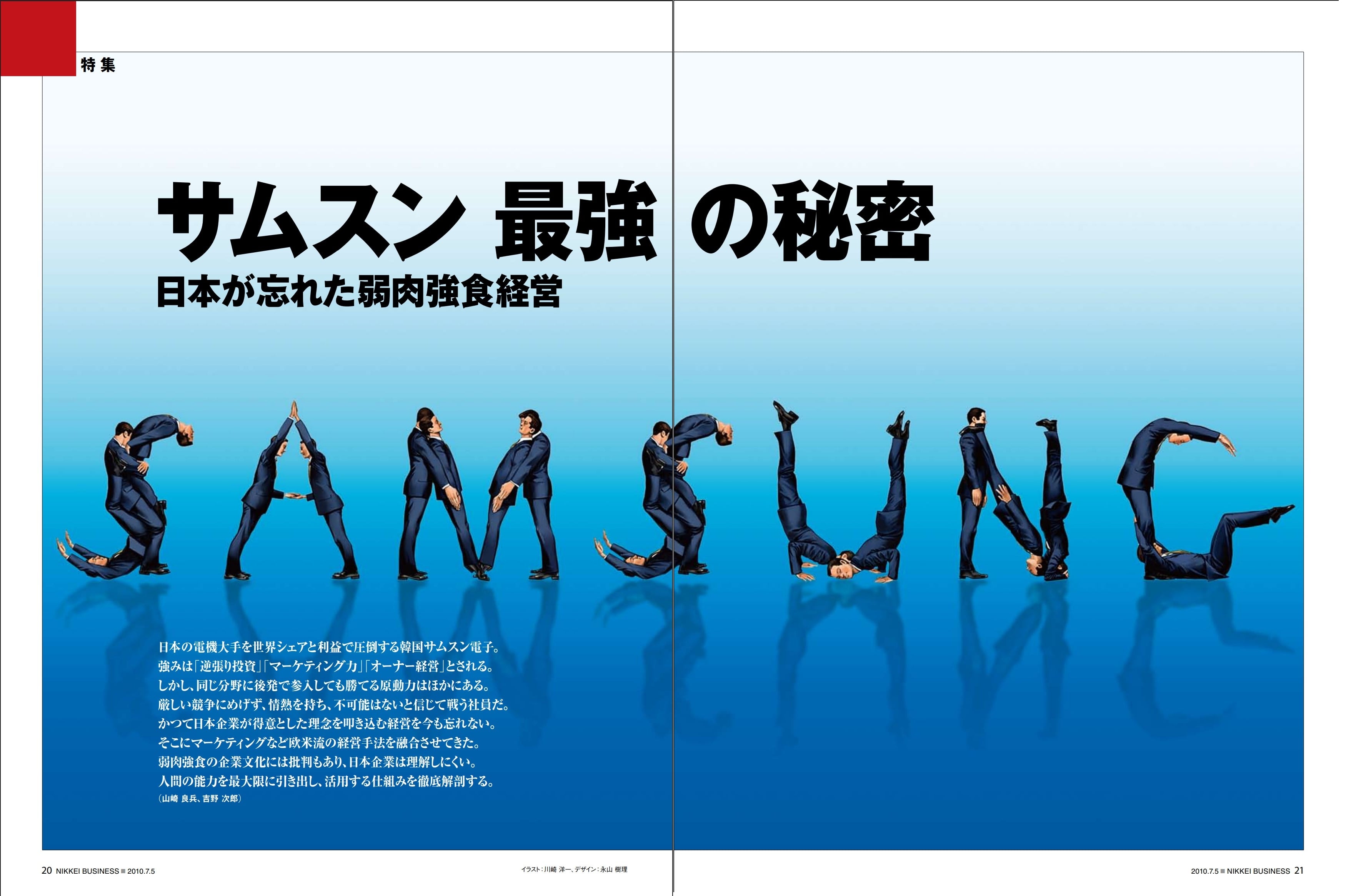
I would like to introduce another special feature article published a decade later. The July 5, 2010, issue of *Nikkei Business* featured *‘The Secret of Samsung’s Strength, the Predatory Management Japan Forgot’*.
“Agile investment, marketing power, and owner-led management are cited as Samsung’s strengths. But the driving force lies elsewhere. It is the employees who fight without yielding to fierce competition, with passion, believing that nothing is impossible.”
It adds: “Japan has become a country that emphasizes work-life balance. People avoid long working hours, and male students apply for jobs traditionally preferred by women. However, Samsung is full of ‘mōretsu (fierce) employees’ who arrive at work two hours before their shifts begin.” Once, Japanese people were called “economic animals” for their fierce corporate warrior spirit. Yet, Japan sighed in admiration while watching Samsung.
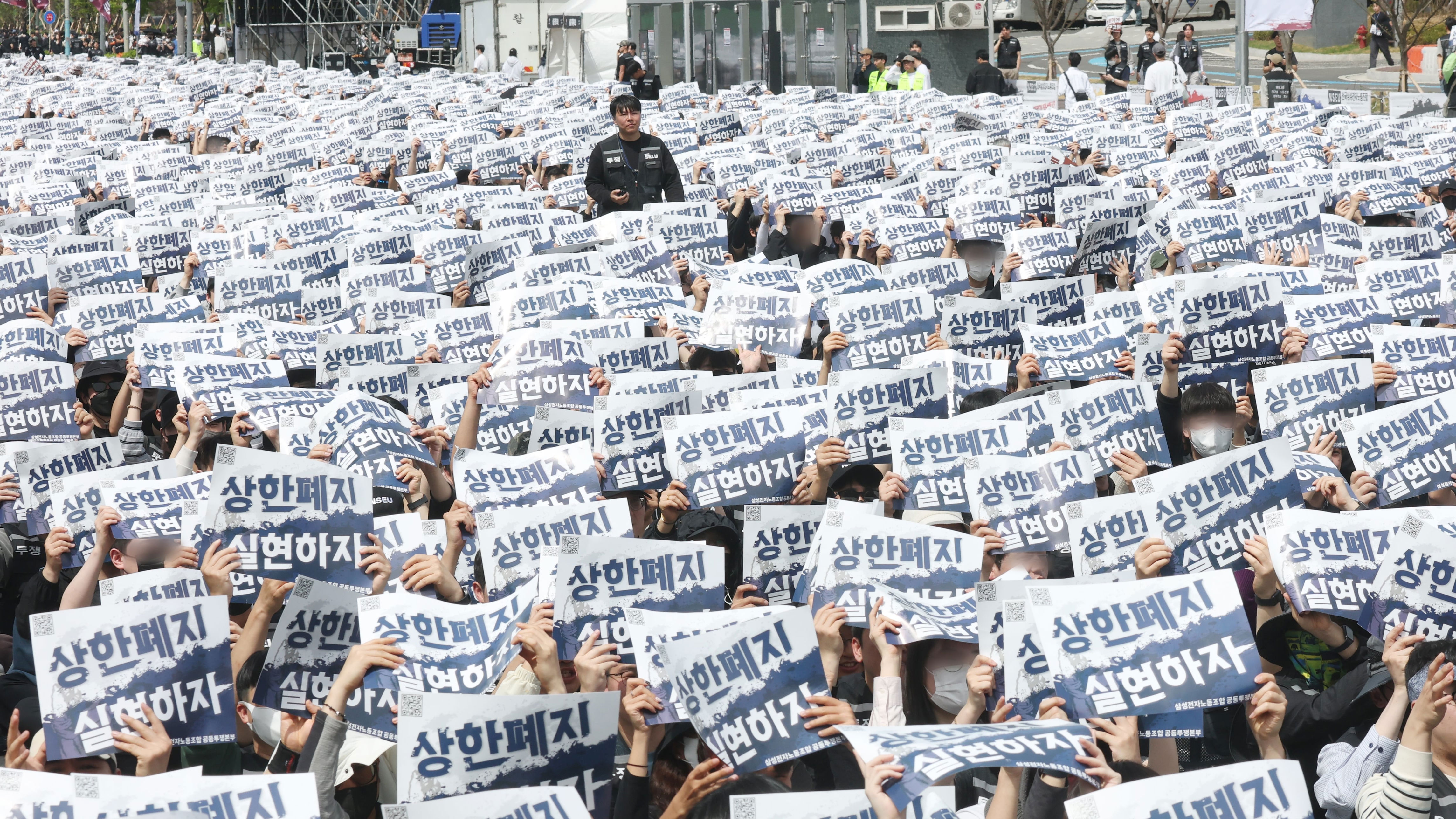
Of course, this is an old story. For years, the term “Samwonmuwon (Samsung + civil servant)” has been a popular neologism, satirizing Samsung employees who prioritize personal life over work, unlike the challenging organizational culture of the past. Yet, this year, amid an AI boom that helped the company avoid crisis, they are demanding astronomical profit-sharing while threatening strikes. They have transformed into Korean Confederation of Trade Unions activists, holding the company hostage and demanding to perish together. Is this now “Samnotong”? Money is not the only issue. This reversal of Samsung’s organizational culture is the worst warning signal flashing at Korea. While making money, Korea has long been leveling downward in many aspects. Even Samsung, which endured countless hardships with the “Samsung spirit,” has been tamed like a Neukgu Zoo and dragged into the “Korean” cage.
Fierce employees? People laugh when they hear this now. They say the times have changed. No, Korea has changed. The “secret of Samsung’s strength” that Japan once spoke of no longer exists in Korea. However, it still thrives in the organizational cultures of competitors in Silicon Valley and Taiwan—the very people who created the AI boom. Korea is no different from them. How can it survive in the global jungle? Even a middle schooler knows it’s impossible.
- 월 5900원 멤버십, 신문 독자에게는 2900원, 조선멤버십
- 55000원 상당의 신문-잡지 8종 마음껏 보기, 조선멤버십
- 현금처럼 쓸 7000포인트 받아 알뜰한 쇼핑, 조선멤버십

Related posts:

Film depicting first lady’s shooting sparks historical distortion controversy
Ambassador Roh Jae-hun optimistic on full-scale Korea-China cultural revival


Majorca vs Menorca vs Ibiza: Which of Spain’s Balearic Islands should you visit?

Hungary’s reckoning with Orban’s corrupt system picks up speed with high-profile arrests