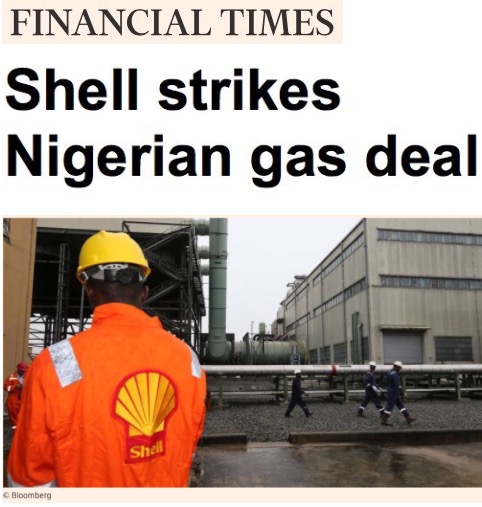
Shell and Partners Finalize $2 Billion Offshore Gas Project in Nigeria
Shell Nigeria Exploration and Production Company Limited, a subsidiary of Shell plc, has taken a final investment decision (FID) on the HI gas project offshore Nigeria, in collaboration with Sunlink Energies and Resources Limited. This development marks a significant step forward for Nigeria’s energy sector, as the project is valued at $2 billion and is expected to play a key role in expanding the country’s liquefied natural gas (LNG) capabilities.
The project, when completed, will supply 350 million standard cubic feet (approximately 60 thousand barrels of oil equivalent) of gas per day at peak production to Nigeria LNG (NLNG), which holds a 25.6% interest in the venture. This contribution aligns with Shell’s broader strategy to increase its global LNG volumes by an average of 4-5% annually until 2030. The project is also expected to begin production before the end of this decade, according to the company.
Strategic Importance of the HI Gas Project
The HI field, discovered in 1985, lies in 100 meters of water depth approximately 50 kilometers from the shore. Its current estimated recoverable resources are around 285 million barrels of oil equivalent. The project is part of a joint venture between Sunlink Energies and Resources Limited (60%) and SNEPCo (40%). The development includes a wellhead platform with four wells, a pipeline to transport multiphase gas onshore at Bonny, and a gas processing plant at Bonny, where processed gas will be sent to NLNG and condensate to the Bonny Oil and Gas Export Terminal.
This project is a key component of Shell’s Capital Market Day 2025 commitment to deliver upstream and integrated gas projects coming online between 2025 and 2030, with a total peak production of more than one million barrels of oil equivalent per day. It also supports Shell’s goal to grow top-line production across its combined upstream and integrated gas business by one percent per year through 2030.
Government Support and Economic Impact
President Bola Tinubu has praised the investment, calling it a testament to the success of his administration’s reform-driven agenda. He highlighted that the project will contribute significantly to Nigeria’s economic development goals, including job creation during construction and operations. The HI gas project is expected to supply approximately 350 mmscf/d from 2028, equivalent to almost a third of the requirements of the NLNG Train 7 project.
Since President Tinubu assumed office in 2023, over $8 billion in significant upstream investment commitments have been made through FIDs in Nigeria’s oil and gas sector. This includes the Ubeta Non-Associated Gas project and the Bonga North deepwater project, both of which were announced in the past 18 months. Together, these projects can supply up to 15% of the NLNG’s total feedgas requirements, covering Trains 1 to 7.
Reforms and Investor Confidence
The Nigerian government has introduced targeted directives under the Office of the Special Adviser to the President on Energy, aimed at reforming the industry. These reforms include unprecedented fiscal incentives, regulatory clarity, operating process simplification, and reduced approval cycle times. As a result, investor confidence has been restored, and Nigeria has repositioned itself as a competitive investment destination.
Olu Verheijen, Special Adviser to the President on Energy, emphasized that the HI and Ubeta gas projects are critical to making NLNG Train 7 not just possible but transformative. These projects will strengthen the reliability of Nigeria’s LNG exports while expanding LPG supply for domestic use, reducing imports, boosting foreign exchange earnings, and advancing clean cooking access for millions of Nigerians.
Future Prospects and Commitment
President Tinubu reiterated his administration’s commitment to creating an enabling environment for both domestic and foreign investors. He stated that the recent FID by Shell, their second in one year, is a clear validation of the wide-ranging reform efforts and a signal to the world that Nigeria is open for business and investment.
The NLNG Train 7 project is expected to expand Nigeria’s LNG production capacity by eight million metric tonnes annually, representing a 35% increase over current production levels. In addition to reinforcing Nigeria’s position in the global gas supply chain, it will support job creation, catalyze economic growth, and stimulate small and medium enterprises (SMEs) in host communities.
Conclusion
The HI gas project represents a major milestone in Nigeria’s journey to unlock its abundant gas resources for both domestic and export use. With the support of government reforms and the continued investment from companies like Shell, Nigeria is positioning itself as a key player in the global LNG market. As more projects come online, the country is set to benefit from increased economic opportunities and sustainable energy development.