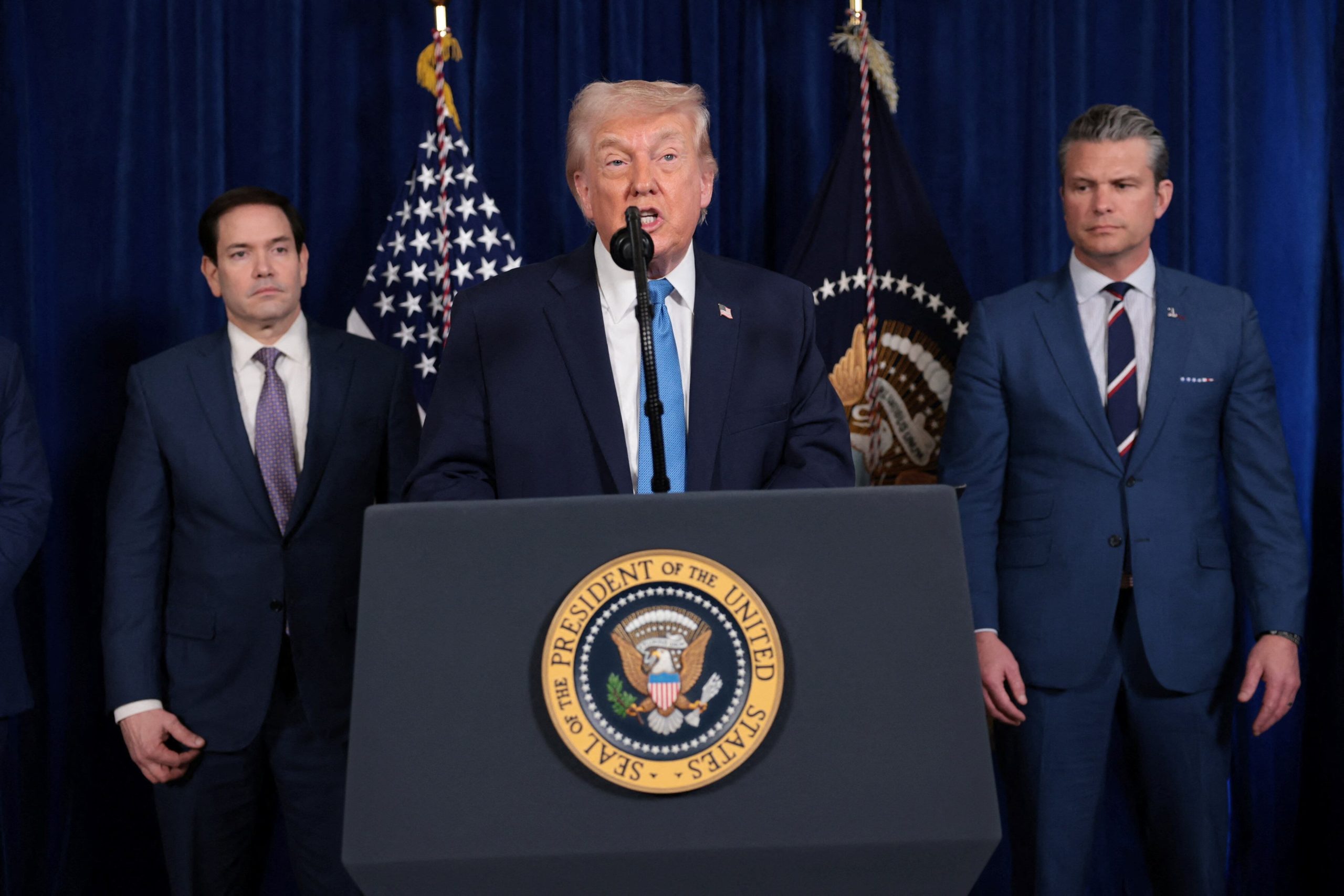
The U.S. military initiated a ground operation in Venezuela on the 3rd, leading to the arrest and transportation of President Nicolás Maduro along with his spouse. In response, U.S. President Donald Trump held an emergency press conference at Mar-a-Lago, Florida, on the same day. During the event, Trump declared, “This operation, which mobilized all assets of the Army, Navy, and Air Force, was a perfect strike demonstrating America’s power.” He further stated, “It was a successful operation unseen since World War II,” emphasizing that the U.S. would “temporarily run the country” to stabilize it until a peaceful “power transition” occurs. However, he clarified that the U.S. would not directly intervene in regime change. Trump also mentioned that American oil companies would enter Venezuela to rebuild its collapsed oil infrastructure.
Trump described the operation as targeting “a heavily armed military fortress in central Caracas to bring the ‘illegal dictator’ Maduro to justice.” He called it “one of the most effective demonstrations of U.S. military might and capability.” According to Trump, “All operational capabilities of the Venezuelan military were neutralized within a short period” due to the cooperation of Venezuelan soldiers and law enforcement agencies who arrested Maduro overnight. He added, “This was thanks to our specific expertise,” and that Maduro and his spouse, Flores, were arrested and would face U.S. judicial proceedings. The Ministry of Justice under Trump’s first term had already indicted Maduro on charges of drug trafficking and money laundering.
Trump remarked, “It was astonishing that not a single U.S. soldier was sacrificed, and no military equipment was lost,” adding, “We deployed numerous helicopters, aircraft, and personnel in this battle.” The Trump administration, which had escalated military pressure by declaring a “war on drugs” against Venezuela—a key transit country for drug trafficking into the U.S.—stated, “We do not want the situation we have endured for so long to recur” and would “operate the country until a regime transition occurs.” Trump stressed, “We want peace, freedom, and justice for the great Venezuelan people” and “cannot risk someone who does not prioritize the Venezuelan people’s interests from taking control. We will not allow such a thing to happen.”
Trump: “Not Afraid to Deploy Ground Forces”
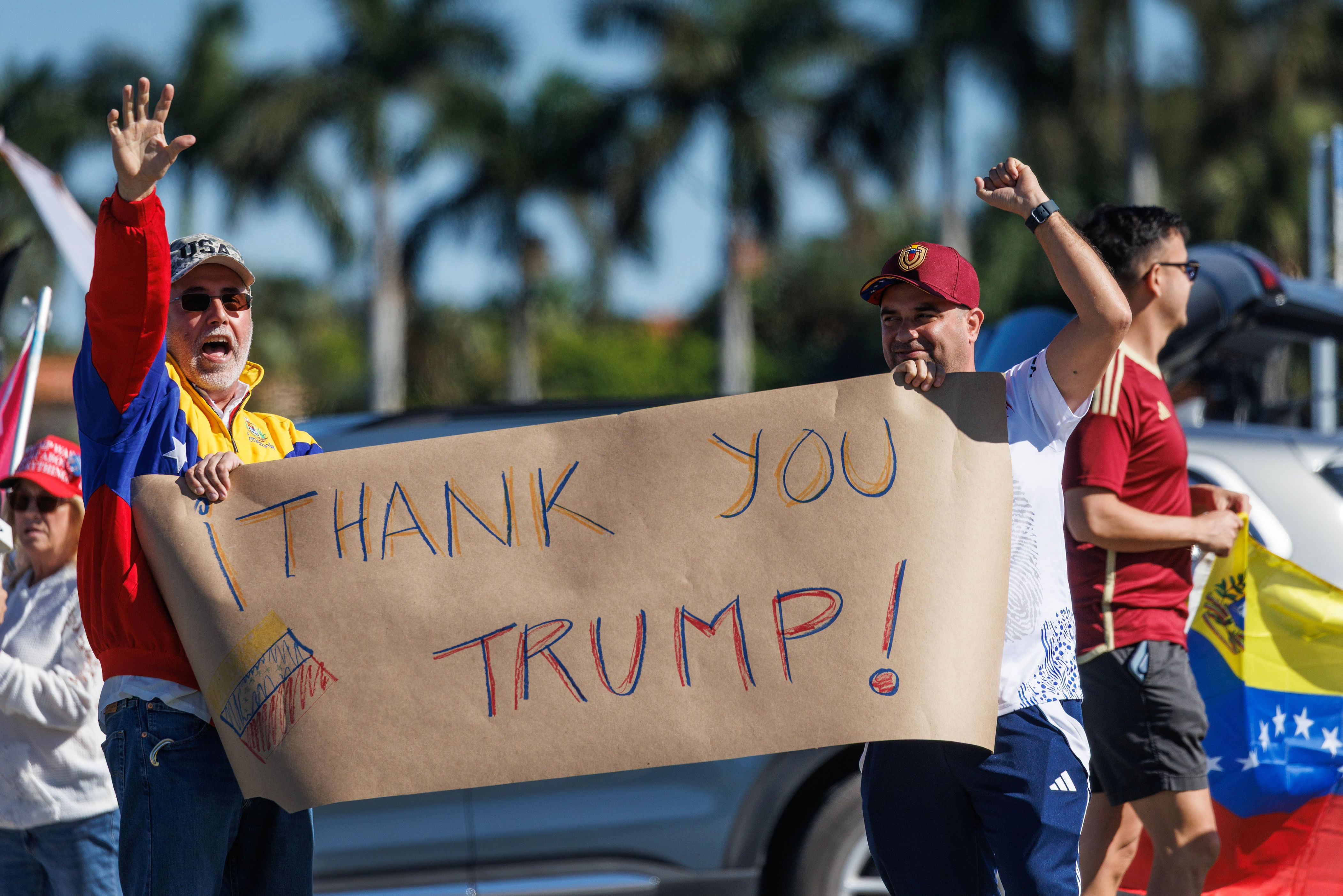
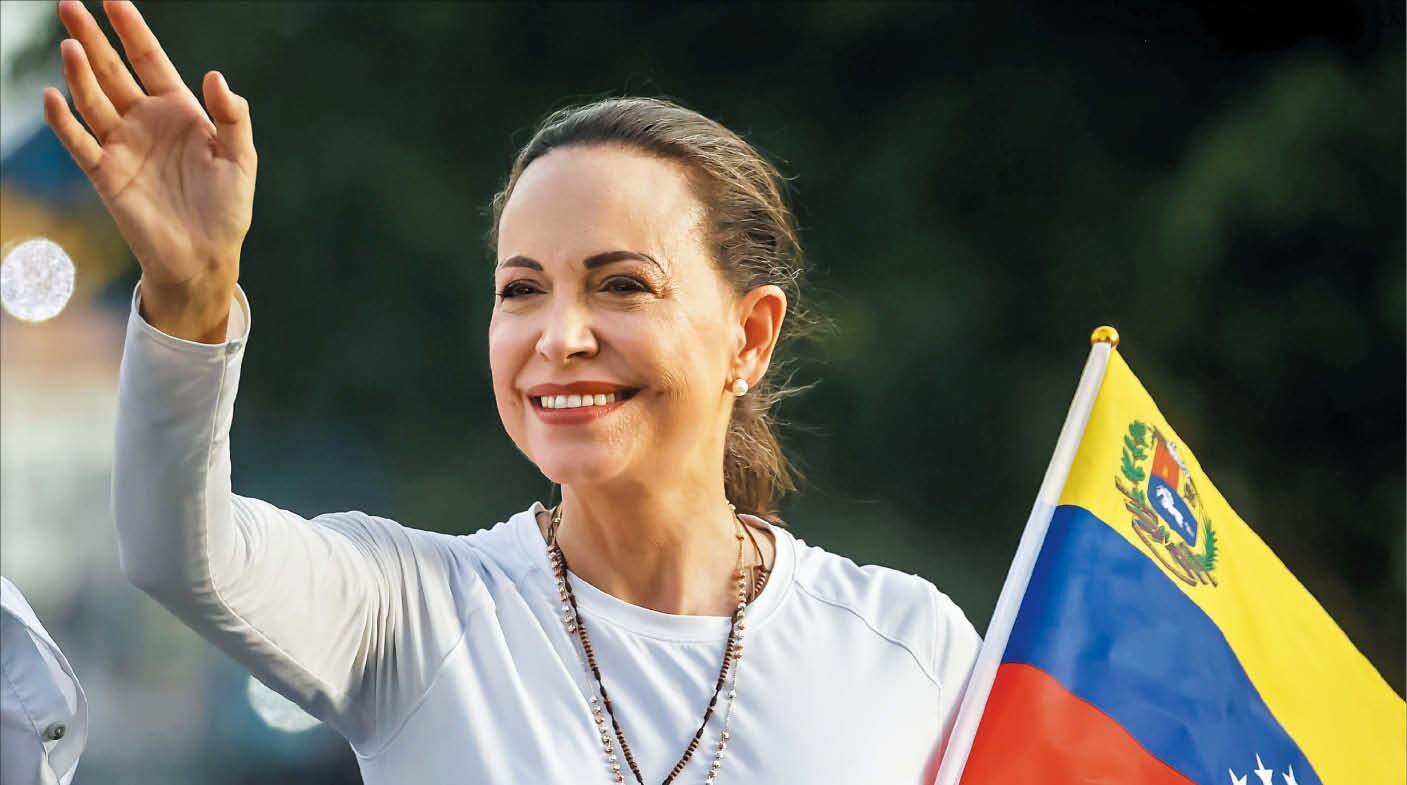
Trump stated, “We are there now and will stay until an appropriate transition occurs,” interpreted as a pledge to manage the situation until a peaceful regime change, with U.S. troops stationed temporarily. He also mentioned naming an operating entity soon, saying, “We will operate with one group.” Secretary of State Marco Rubio communicated with Vice President Delcy Rodríguez after Maduro’s ouster. Trump noted, “She told Secretary Rubio she would do whatever is needed,” but added, “She is a president appointed by Maduro.” Regarding María Corina Machado, last year’s Nobel Peace Prize laureate and opposition leader, Trump said, “She is a very good woman but lacks domestic support or respect, making it very difficult for her to become a leader at this time.” Trump emphasized, “We will operate this country cautiously and fairly to generate significant revenue and return money to the Venezuelan people,” adding, “We are not afraid to deploy ground forces if needed” and that “the U.S. fleet remains on standby, and America retains all military options.”
The operation could be seen as conflicting with Trump’s long-standing “America First” principle, but he justified it by stating, “We want to be surrounded by stable, good neighbors.” He formalized that strengthening and maintaining U.S. influence in the Western Hemisphere was one of the operation’s goals, declaring, “Under our new National Security Strategy (NSS), U.S. dominance in the Western Hemisphere will never be questioned again.” He hinted at the possibility of expanding the operation to Cuba, Colombia, and others. Trump also seemed to address China’s growing influence in Latin America, stating, “The U.S. will never allow external forces to plunder our people in the Western Hemisphere or push us in or out of the hemisphere.” The NSS, the Trump administration’s top diplomatic, security, and military guideline announced last month, reaffirms and strengthens the Monroe Doctrine to “restore U.S. primacy in the Western Hemisphere and protect our homeland and critical geographic access across the region.”
Focus on Venezuela’s Oil Industry
Regarding Venezuela’s oil industry, a major source of income, Trump stated, “It has been completely ruined for a long time, producing almost nothing compared to its potential.” He announced, “We will invest tens of billions of dollars by deploying the world’s largest U.S. oil companies to restore the severely damaged oil infrastructure and generate revenue for the nation.” He added, “We will reclaim the oil that should have been taken long ago, and enormous money will flow from the ground to compensate for all our expenditures.” Trump warned, “We are prepared to carry out a second attack if necessary, though it is probably not needed at the moment.” The press conference was attended by Rubio, Secretary of Defense Pete Hegseth, Chairman of the Joint Chiefs of Staff Dan Caine, and White House Deputy Chief of Staff Stephen Miller.