Union Leaders Challenge Democratic Support for Maine Governor in Senate Race
Union leaders across the United States are raising concerns about the Democratic Party’s support for Governor Janet Mills in Maine’s upcoming Senate primary. They argue that Mills’ record on labor issues is not as strong as it could be, and they believe that backing her may alienate key voting blocs. This growing tension highlights a deeper rift between the national Democratic establishment and organized labor, particularly in the context of the 2026 midterms.
A Call to Action from Labor Unions
United Auto Workers (UAW) President Shawn Fain recently spoke with Senate Minority Leader Chuck Schumer, D-N.Y., during a call that focused on several topics, including the Maine race. According to sources familiar with the conversation, Fain emphasized what he sees as the Democratic leadership’s shortcomings in addressing the needs of working-class voters. He used the Maine contest as an example, pointing out the party’s failure to adequately listen to those who feel left behind.
The UAW has chosen to support Graham Platner, the opponent of Mills in the primary, while Schumer and the Democratic Senatorial Campaign Committee (DSCC) continue to back Mills. This divergence in support has led to increasing pressure on the DSCC to reconsider its stance.
Michael Monahan, international vice president of the International Brotherhood of Electrical Workers’ 2nd District, which includes Maine, sent a letter to DSCC leadership expressing concern over their involvement in the primary. In the letter, Monahan urged the DSCC to step back from the race, stating that their support for Mills is troubling to union members.
He described Mills’ relationship with labor unions as “fraught,” citing public polling that shows Platner leading Mills. Monahan argued that spending money against Platner could weaken him for the general election against Republican Sen. Susan Collins.
The Strategic Importance of the Maine Race
The Maine Senate race is seen as one of Democrats’ best opportunities to flip a Republican-held seat this fall. It is crucial for them to win the race if they hope to gain control of the Senate. While the national Democratic establishment has thrown its support behind Mills, the push from labor unions highlights some of the base’s discontent with this decision.
Platner, who announced his candidacy in August, has managed to weather controversies despite facing blowback early in his campaign. Last year, he apologized for offensive comments made in past Reddit posts and for covering up a tattoo with a Nazi association. Despite these issues, his campaign has gained momentum and support from various unions.
Platner has received endorsements from prominent figures such as Sens. Bernie Sanders, I-Vt., Chris Murphy, D-Conn., and Sheldon Whitehouse, D-R.I. His union backers include the International Association of Machinists and Aerospace Workers. David Sullivan, the union’s general vice president of the eastern territory, said that his membership was upset about Democratic leaders’ backing of Mills after the union had endorsed Platner.
“So I called my people in D.C. and said, ‘Schumer needs to stay out of Maine,’” Sullivan said, adding: “They said they were going to stick by their guns and they were going to put millions of dollars in for Janet Mills. … We’re going to fight this all the way.”
Mills’ Pro-Labor Record and Challenges
Mills’ campaign has highlighted her pro-labor efforts, including increasing the minimum wage, boosting worker-safety standards, and prohibiting employers from retaliating or discriminating against workers who report violations of labor laws. The campaign also pointed to a 2022 endorsement from the Maine AFL-CIO and a supportive statement from Monahan regarding a bill she vetoed in 2021.
“Governor Mills’ record of fighting for workers’ rights, dignity, and pay has earned her praise from many unions throughout the state of Maine,” said Tommy Garcia, a Mills spokesperson, in a statement. “She has made clear she will continue fighting for working people in the Senate to lower costs, protect jobs, and improve our economy — and given she is the only candidate in this race who has negotiated and signed legislation that delivers real progress, Maine voters know she will continue to deliver for them.”
However, Mills has had clashes with organized labor during her time as governor. In 2019 and 2021, she vetoed labor-backed measures aimed at strengthening the power of a third party’s rulings in disputes over public-sector workers’ wages, insurance, and retirement. The measure remains a priority for the Maine AFL-CIO.
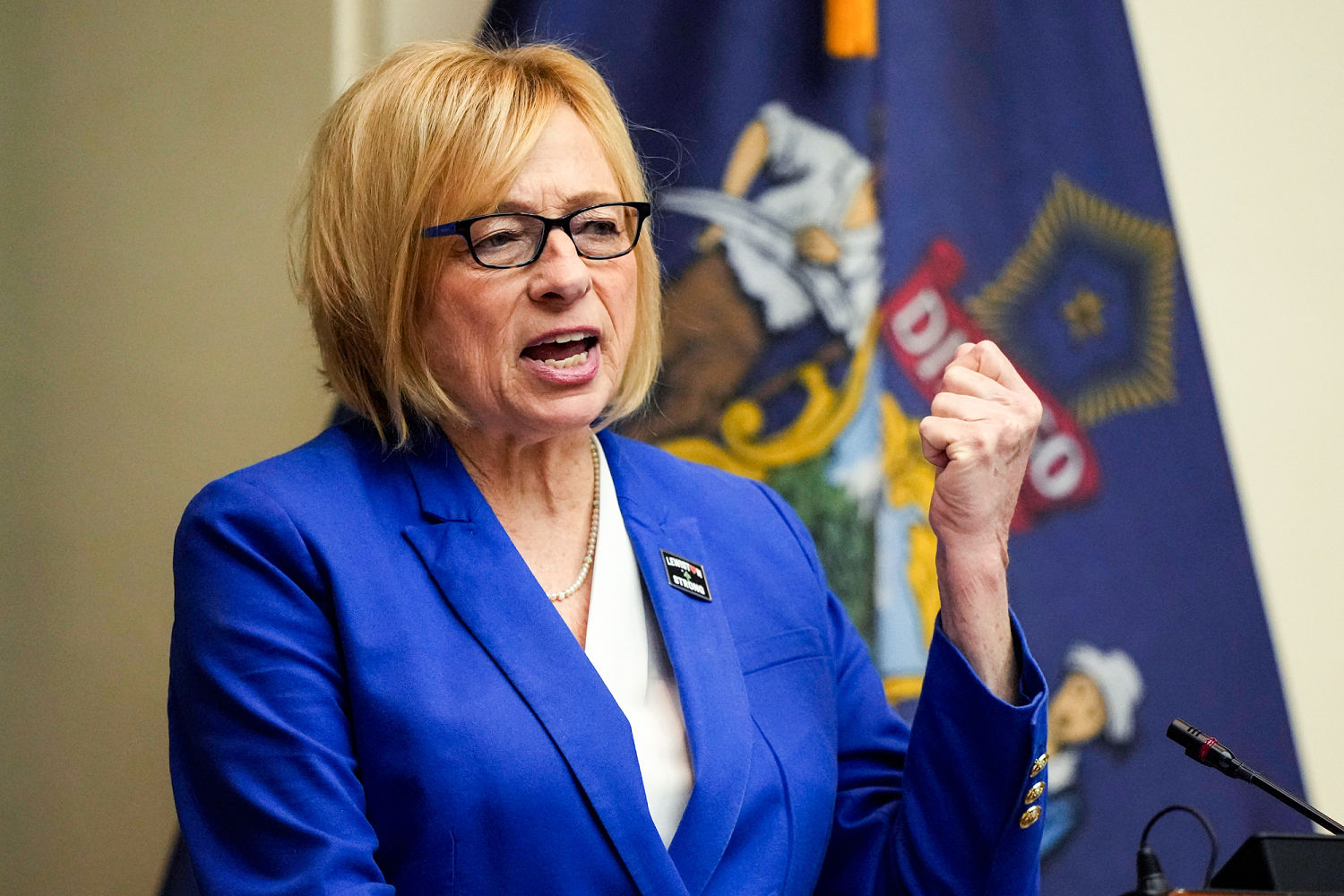
Sullivan described labor’s relationship with Mills as “adversarial.” “So Janet Mills is not somebody we will support,” he said. “And if, for some odd reason, she ends up going off some miracle win against Graham Platner, you’ll probably see a lot of unions supporting Collins.”
The UAW, which represents around 2,000 workers in Maine, endorsed Platner the day after Mills launched her campaign in October. Fain said in an October statement announcing the endorsement that Platner is “focused on the real problems facing workers across this country — not the distractions the billionaire class uses to divide us. His campaign is rooted in the same core issues our union fights for every day: a living wage, affordable health care, retirement security, and time outside of work to actually live our lives.”
Platner also has endorsements from the Maine affiliate of National Nurses United and the International Federation of Professional and Technical Engineers.
In an interview, Monahan of the IBEW said he was drawn to Platner’s “impressive” backstory. “He’s an impressive person, kind of a [former Sen. Joe] Manchin, [Sen. John] Fetterman type, in that kind of category,” Monahan said, referring to Democrats from West Virginia and Pennsylvania who tacked to the center and frequently butted heads with the party’s base. “The numbers I keep seeing out of it, I mean, this isn’t just his polls. The guy’s kicking ass.”
Schumer and the DSCC did not respond to requests for comment. They touted Mills as a strong recruit when she launched her campaign back in October. Mills told NBC News at the time that she met with Schumer once, several months before she launched her campaign, and that he encouraged her to run for the Senate.
The DSCC has since backed Mills’ candidacy, signing on to a joint fundraising committee with Mills’ campaign to help boost her fundraising. In a memo outlining “multiple paths” to the Senate majority released last month, the DSCC touted Mills and made no mention of Platner.
“Janet Mills happens to have such a strong record, not only as the only Democrat who’s won in 20 years in Maine, but she has a record of fighting for Mainers, understanding their issues,” the DSCC’s chairwoman, Sen. Kirsten Gillibrand of New York, told NBC News in January. “She stood up to President Trump, she sued him in court and won. So she uniquely, I think, has the grit and the chops to really take on Susan Collins and win. And so that’s why we are so supportive of Gov. Mills.”
Asked whether the Maine Senate race would still be winnable if Platner is the nominee, Gillibrand said, “I’m confident we will have the best nominee, and I’m confident that we will win.”