Impact of the Persian Gulf Conflict on Nepal
The ongoing war in the Persian Gulf has created a ripple effect that is impacting the security and economic stability of the region, with potential consequences for countries far beyond the immediate conflict zone. Nepal, which relies heavily on its diaspora and trade relations with Gulf countries, is particularly vulnerable to these developments.
Escalation of Hostilities and Disruption
Following attacks on Iran by the United States and Israel, Tehran has retaliated by targeting American military camps in several Gulf nations, including Qatar, Saudi Arabia, Bahrain, Kuwait, the United Arab Emirates, and Oman. This escalation has led to significant disruptions in air services and employment opportunities across the region.
Nepal’s economy is deeply intertwined with the Gulf region, where approximately 1.9 million Nepali workers are currently employed. Around 65% of the 700,000 Nepalis who leave each year for foreign employment head to the Gulf, contributing significantly to the country’s remittance inflows. In the fiscal year 2024-25, Nepal received Rs1.702 trillion in remittances, with Rs673 billion coming from Gulf countries alone. In the first half of the current fiscal year 2025-26, Rs1.03 trillion was remitted, with Rs422 billion from the Gulf.
Effects on Tourism and Trade
Gulf countries also contribute to Nepal’s tourism sector. According to the Nepal Tourism Board, 20,504 visitors from Gulf nations arrived in the last fiscal year, accounting for 1.8% of total tourist arrivals. If tensions persist, this could lead to a decline in both tourism and remittance inflows.
In terms of trade, imports from Gulf countries include essential goods such as gold, silver, jewellery, copper wire, plastics, packaging materials, and raw materials for the pipe industry. Experts warn that fuel imports could be disrupted, leading to higher prices and broader economic consequences.
Economic Vulnerabilities
Economists caution that prolonged instability in the Gulf could intensify inflationary pressures in Nepal, given the country’s heavy reliance on imported fuel and goods. Recent years have seen modest economic growth, but increased dependence on imports has made the economy more susceptible to external shocks.
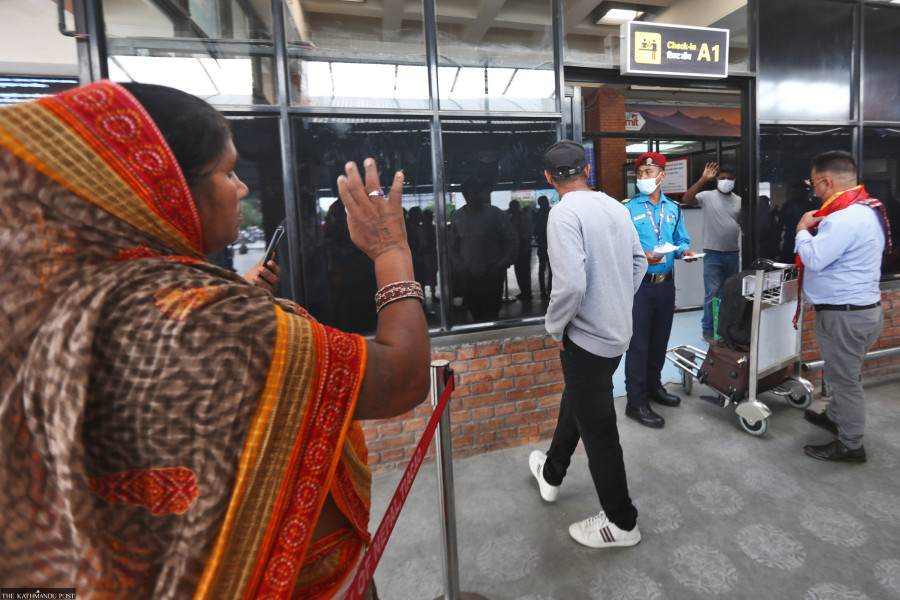
Trade expert Rabi Shankar Saiju emphasized the need for the government to prepare security and evacuation plans for labor destinations in the Gulf. He also warned that outbound labor migration could slow down, directly affecting employment opportunities and remittance flows.
Impacts on Remittances and Employment
Ram Sharan Kharel, head of the Economic Research Department at the Nepal Rastra Bank, noted that trade activities in West and Central Asian countries have been disrupted due to the conflict involving Iran. He highlighted that Gulf nations remain the primary destinations for Nepali migrant workers, and any economic downturn in these regions could weaken the environment for sending additional workers abroad.
Chandra Tandon, former president of the Nepal Remitters Association, stated that unrest in the Gulf had already affected Nepali workers there, with inevitable consequences for remittance flows. He mentioned that many money exchange companies in Qatar were closed during the weekend, with minimal transactions reported.
Labor Migration and Economic Dependence
Government data show that the countries being affected by the conflict are among Nepal’s principal labor destinations. Approximately 700,000 Nepalis are employed in the United Arab Emirates, 384,000 in Saudi Arabia, 360,000 in Qatar, 175,000 in Kuwait, 30,000 in Bahrain, and 25,000 in Oman. Beyond the Gulf, around 60,000 Nepalis work in Romania, 50,000 in South Korea, 50,000 in Portugal, and 40,000 in Croatia.
Qatar, which hosted the 2022 FIFA World Cup and is preparing for the 2030 Asian Games, remains a key employer. Government data show 140,000 Nepalis left for Qatar in the fiscal year 2024-25, up from 134,000 the previous year.
Trade and Supply Chain Risks
Beyond labor and remittance, trade exposure is substantial. According to the Department of Customs, Nepal imported goods worth Rs50.31 billion from Gulf countries last fiscal year and exported Rs3.45 billion. In the first seven months of the current fiscal year, imports from the region stood at Rs48.76 billion, while exports totaled Rs1.64 billion.
The United Arab Emirates is Nepal’s largest trading partner in the Gulf, primarily supplying gold, silver, and copper wire. Saudi Arabia supplies essential polymers for plastic, packaging, and pipe industries, while Qatar is a major source of chemical fertiliser. Oman provides gypsum vital for cement production.
Energy Market Volatility
Oil markets have already reacted to the conflict, with international media reporting crude prices climbing to around $82 per barrel on Monday. Analysts project that prices could approach $100 if instability continues. As Nepal imports all petroleum products from Indian Oil Corporation—which sources much of its crude from the Gulf—any sustained spike would inflate transport and production costs domestically.
The Strait of Hormuz is critical, as a significant share of global oil shipments passes through that route. Any prolonged disruption will transmit price shocks to Nepal.
Public Response and Economic Outlook
Amid reports of long queues at petrol pumps, the Nepal Oil Corporation sought to reassure the public. Managing Director Chandika Bhatta said supplies via pipeline from India remained regular and sufficient, urging consumers not to hoard fuel in jerrycans due to fire risks.
Kamlesh Kumar Agrawal, president of the Nepal Chamber of Commerce, acknowledged that Nepal cannot insulate itself from global turbulence. “We are integrated into the world economy. Short-term remittance decline is possible, and supply chains will face stress. The scale of impact depends on how long the conflict lasts and how severely Gulf economies are shaken,” he said.