Bangladesh’s Potential Acquisition of JF-17 Fighter Jet Simulator
Bangladesh may be enhancing its air power capabilities through the reported acquisition of a JF-17 flight simulator, according to recent developments. This potential move has raised concerns among analysts about the implications for regional security, particularly in India’s sensitive northeast.
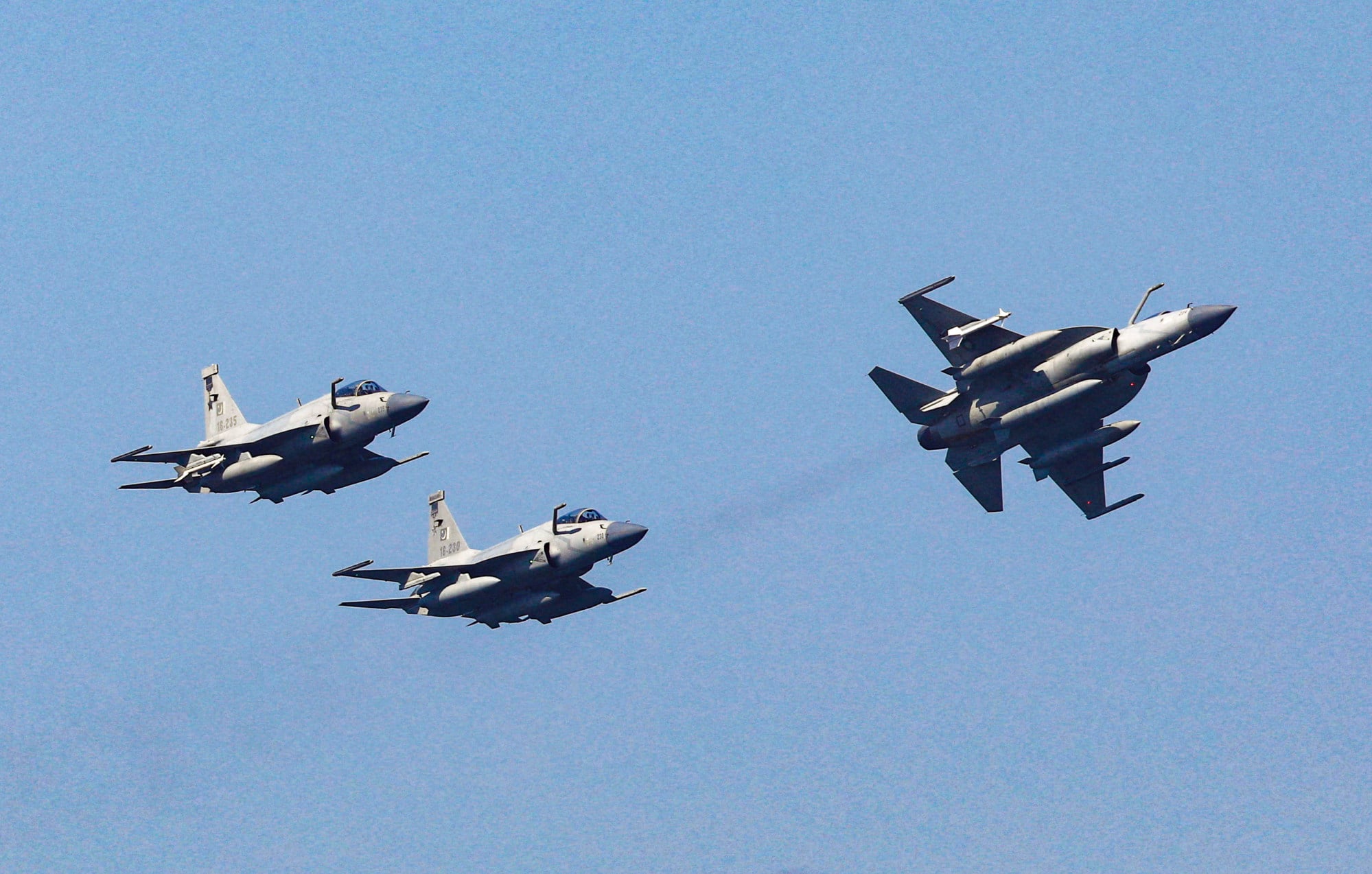
According to Pakistani media reports, Pakistan has transferred a fully operational simulator of the JF-17 Thunder Block III combat aircraft to Bangladesh. Fighter jet simulators are essential tools used to train pilots in combat tactics and systems management, replicating the experience of flying an actual aircraft.
The JF-17 Thunder is a multi-role fighter jet jointly developed by the Pakistan Aeronautical Complex and Chengdu Aircraft Corporation. It serves as one of the primary combat aircraft for the Pakistan Air Force and has also been exported to countries such as Azerbaijan, Myanmar, and Nigeria.
The reported transfer of the simulator follows discussions between the air force chiefs of Pakistan and Bangladesh in January, which included “detailed discussions” on potential procurement of the jet. If confirmed, this purchase would significantly boost Dhaka’s air combat capabilities, replacing its aging Russian-made MiG-29s and Chinese-made F-7s, also known as J-7s.
Jagannath Panda, head of the Stockholm Centre for South Asian and Indo-Pacific Affairs at the Institute for Security and Development Policy in Sweden, noted that the simulator transfer signals a “possible acquisition.” He explained that the JF-17 Block III would offer Bangladesh a relatively affordable multi-role platform with beyond-visual-range missile potential, modern avionics, and support infrastructure from both China and Pakistan.
Liselotte Odgaard, a senior fellow at the Hudson Institute in Washington, highlighted that the transfer of the simulator marks a “critical enabling step” towards a major capability upgrade. She emphasized that the move indicates “serious intent to field modern fighters.”
Despite the historical tensions between Bangladesh and Pakistan, relations have improved since protests led to the ousting of Bangladeshi Prime Minister Sheikh Hasina in 2024. However, Bangladesh’s relationship with India remains strained due to Delhi’s refusal to extradite Hasina, who sought refuge in India and was given a death sentence in absentia.
India has increased its military presence near Bangladesh, especially around the Siliguri Corridor, a narrow strip of land linking India to its seven northeastern states. In November, the Indian Army established three new military garrisons to bolster surveillance and combat readiness around the corridor.
Odgaard noted that India’s “comfort margin” around the corridor would be reduced, and mutual threat perception would increase. However, she emphasized that direct conflict between India and Bangladesh is unlikely, as the JF-17 would not overturn the military balance or enable decisive force projection into India.
Panda added that purchases of JF-17s by Bangladesh would add a “military layer” to an already politically sensitive relationship. He warned that even limited modernization could prompt Indian counter-deployments, tighter surveillance, and more rigorous threat assessments.
Michael Kugelman, senior South Asia fellow at the Washington-based Atlantic Council, suggested that the new government in Dhaka would likely take cautious steps to improve ties with Delhi. He noted that the trajectory for India-Bangladesh relations is more positive now than during the interim government period preceding the recently elected Tarique Rahman administration.
He emphasized that there is a genuine desire to better balance Dhaka’s relations with its key neighbors, including India, Pakistan, and China. This would involve patching up ties with India.
As the region continues to navigate complex geopolitical dynamics, the potential acquisition of the JF-17 by Bangladesh underscores the evolving nature of defense and diplomatic relations in South Asia.