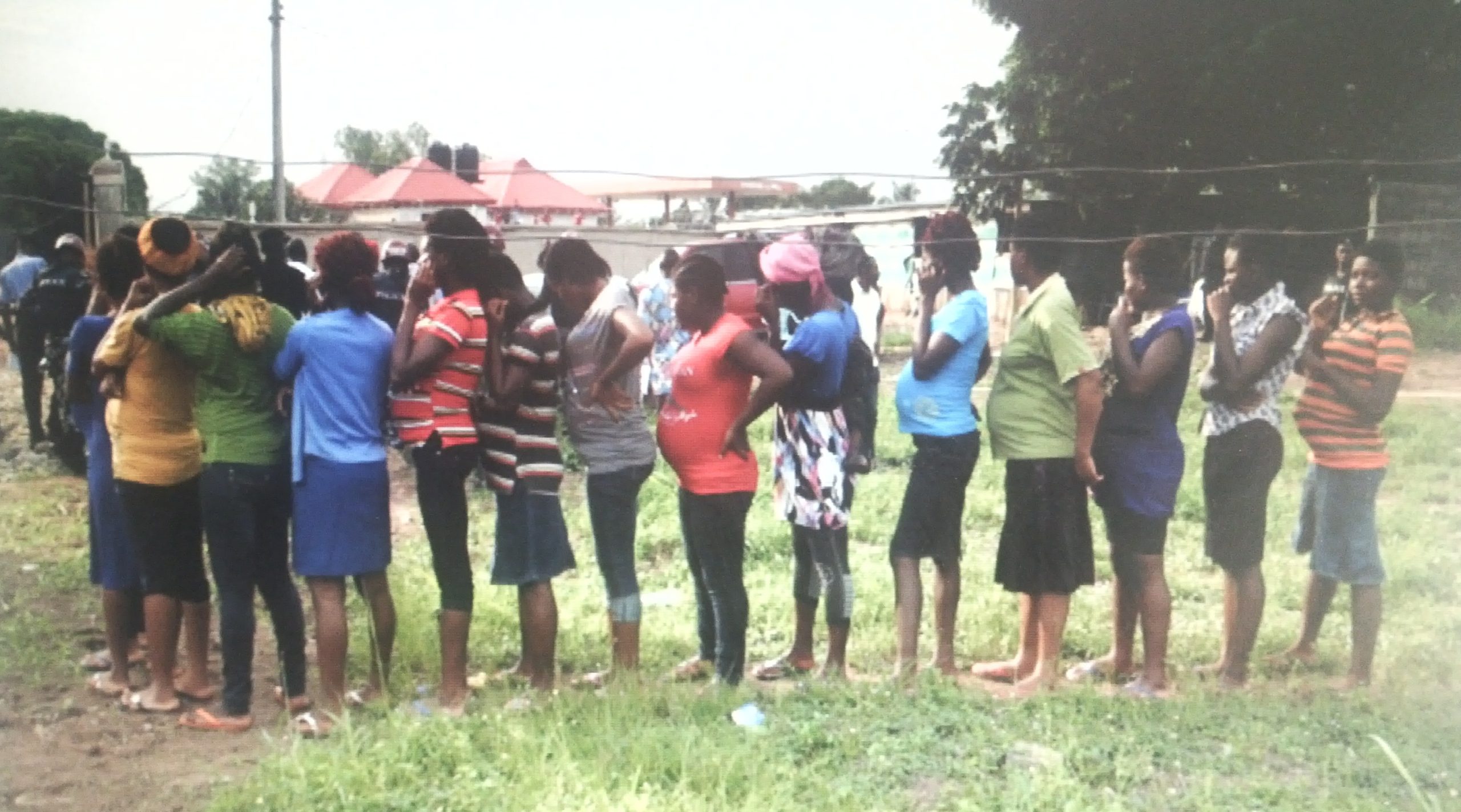
Landmark Conviction in Baby Trafficking Case
After an 11-year legal battle, the National Agency for the Prohibition of Trafficking in Persons (NAPTIP) has successfully secured a conviction against a couple accused of running a baby factory. The case marks a significant milestone in the fight against human trafficking in Nigeria.
The convicts, Ogundeji Happiness Ayodele and Prince Ogundeji Abiodun, were sentenced to 14 years in prison without the possibility of a fine by Justice F.A. Olubanjo of the Federal High Court (FHC), Akure, Ondo State, on February 26. This verdict was announced by NAPTIP on Tuesday, highlighting the agency’s persistent efforts to bring traffickers to justice.
The couple was arrested in 2014 for operating what was allegedly a baby factory at their residence on Sarajo Street, Okitipupa LGA of Ondo State. The arrest followed a referral from the Nigeria Immigration Service (NIS) to NAPTIP.
According to NAPTIP, a raid conducted at the premises—described as a registered care home—revealed underage pregnant girls who had been detained against their will. These individuals were kept until they gave birth, after which their babies were sold to interested buyers.
During the investigation, authorities recovered several hospital (antenatal) cards, eight vehicles with their keys, N4 million hidden in the trunk of one of the cars, two bungalows, a poultry farm, and other valuable items.
A Victory in the Fight Against Human Trafficking
Addressing journalists in Lagos, NAPTIP’s Lagos Zone Commander, Mrs. Comfort Agboko, emphasized that the couple was convicted on a 10-count charge under Section 19(c) of the Trafficking in Persons (Prohibition) Law Enforcement and Administration Act, 2003.
The court ordered the forfeiture of the eight cars, two bungalows, and N4 million recovered during the investigation to the Federal Government through NAPTIP. Additionally, other properties belonging to the convicts will be auctioned, with N1 million each awarded as compensation to the three victims who testified during the trial.
Mrs. Agboko described the judgment as a landmark victory in the fight against human trafficking. She highlighted the challenges NAPTIP faced in securing the conviction, including the need to obtain a court order on May 12, 2014, from the FHC Akure to seal and seize the properties found within the premises.
She noted that the ruling sends a strong warning to traffickers that the law will eventually catch up with them, regardless of how long it takes or how influential they may be.
Challenges in Prosecuting Human Trafficking Cases
Mrs. Agboko also shared insights into the difficulties NAPTIP faces when prosecuting trafficking cases. She explained that the agency does not have assigned courts for its cases, which often leads to cases restarting when judges are transferred. This makes it difficult to access witnesses, particularly victims who initially testified.
She also mentioned that prosecutors sometimes face intimidation from senior advocates (SANs). Despite these challenges, she emphasized that NAPTIP officers are trained to remain steadfast in their mission.
“Even if we succeed in saving one life, two lives, we have affected humanity,” she said. “Like in this case, we saw that it was three witnesses, there were more than three that testified, but those were the witnesses we had access to at the time the case started over again.”
Collaboration and Awareness Efforts
Reaffirming NAPTIP’s commitment to protecting Nigerians from exploitation, Mrs. Agboko urged the public to support the agency’s efforts to combat human trafficking across the country.
She also spoke about the importance of establishing special courts for trafficking cases. Currently, most cases are prosecuted at the Federal High Courts, though some are handled in state high courts.
In Lagos alone, there are more than 50 cases currently being processed at the Federal High Courts. However, the establishment of State Taskforces and the involvement of Attorney Generals have helped raise awareness among judges about the importance of prioritizing human trafficking cases.
Combating Trafficking Through Partnerships
NAPTIP collaborates with various partners to curb trafficking, including transporters and border agencies. Mrs. Agboko revealed that several victims have been rescued from Seme Border by the NIS and handed over to NAPTIP.
“We intercept victims of trafficking at Seme Border two to three times a week. They are always forwarded to us for action,” she said.
NAPTIP also conducts continuous awareness campaigns to educate the public on the tactics used by traffickers. This includes informing people about recruitment methods to prevent them from falling victim.
Despite these efforts, some individuals still choose to leave Nigeria, often for countries like Mali, Cote d’Ivoire, and Ghana, where they are exploited for internet fraud.
Last year, NAPTIP received 231 victims and 24 suspects of internet fraud from Ghana. The suspected traffickers were handed over to the Economic and Financial Crimes Commission (EFCC), while the victims were reunited with their families.
Similarly, the agency has rescued 78 victims from Cote d’Ivoire and continues to receive victims from there and Ghana regularly.