The Quiet Appointment That Could Reshape Zimbabwean Politics
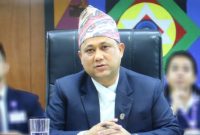
When retired general Philip Valerio Sibanda was recently appointed to the Zanu PF politburo and attended his first meeting last week, the development predictably generated some fetch-and-patch commentary on social media, in the mainstream media, and, to some extent, the bars and kombis. But there were no dramatic headlines. No major public celebrations. No visible mobilisation by supporters. Bottom truth is, many Zimbabweans barely noticed.
Yet, quite often, the important story is not told when it arrives. Sometimes the ultimate story arrives quietly and is quickly forgotten. As in the case of Sibanda’s appointment, the story was passed as seemingly routine appointment, a strategic redeployment or a subtle shift in institutional positioning within Zanu PF. Years later, people look back and realise they were witnessing the early stages of a much larger story.
Whether Sibanda’s recent appointment ultimately falls into that category remains to be seen, but it certainly raises material questions. And, in Zimbabwean politics, questions are often more revealing than answers.
The central question is simple: Does Valerio Sibanda’s appointment to the politburo have significance in the ongoing succession contestations within Zanu PF?
Context Matters
Political appointments do not happen in a vacuum but mainly within particular circumstances. And the circumstances surrounding Sibanda’s appointment are impossible to ignore.
First, there was the earlier attempt to bring him into the politburo while he was still serving as commander of the Zimbabwe Defence Forces in October 2023. That move generated debate because it ran against Section 208 of the constitution that prohibits serving members from participating in partisan politics. At the end of the day, President Emmerson Mnangagwa seemed to have buckled under both internal and external pressures, and the appointment was reversed.
Surely, as a lawyer surrounded by pretty smart lawyers and adept technocrats, Mnangagwa must have been the first to know what the law says. Was the first appointment, then, a clever “strategic error” to test the waters or simply initiate the presence of Sibanda in Zanu PF politics?
Then came the retirement. After years at the apex of Zimbabwe’s military establishment since the removal of Robert Mugabe in 2017, Sibanda stepped down from active service in late November last year, paving the way for Emmanuel Matatu. Many assumed that retirement would mark the gradual winding down of his public role, as seems to be the case with other generals like Godwin Matanga, the former police chief and liberation hero. Instead, he soon found himself formally incorporated into the highest structures of the ruling party.
That alone is politically intriguing. And the timing makes it even more interesting, more like mysterious. The appointment comes at a moment when succession remains one of the most sensitive issues within Zanu PF and, by implication, Zimbabwe.
Lessons from the Past
Officially, Mnangagwa continues to maintain that he will respect constitutional term limits. At the same time, sections of his supporters continue pushing the “2030 agenda” and constitutional amendments through CAB3 that is set to extend his stay in office beyond 2028.
One mistake conventional political analysis frequently makes is treating Zimbabwean succession politics as if it is strictly a function of ordinary democratic principles and rules. It rarely does. Formal positions matter. Party structures matter. And elite patronage interests matter too.
The Tsholotsho episode of 2004 remains one of the clearest examples. At face value, it appeared to involve disagreements over leadership succession within Zanu PF. In reality, it exposed deeper struggles involving regional alliances, liberation-war networks and competing visions of the party’s future.
A decade later, Joice Mujuru’s downfall offered another lesson. When Mugabe appointed her vice president immediately after the Tsholotsho plot was outed and neutralised on that rainy day in Harare, he made a subtle poser: “Do you want her to end in this new position?” That gave the impression that she was already being designed for the ultimate office.
Yet institutional position alone proved insufficient. Once key centres of power shifted against her, her political fortunes collapsed with remarkable speed in 2014, resulting in her replacement by her arch rival, Mnangagwa.
Then came 2017. Again, the official narrative and the underlying political reality were not entirely the same thing. The transition that brought Mnangagwa to power was not simply a story about one politician replacing another. It reflected the convergence of political, military and security interests around a particular outcome.
These examples matter because they remind us that succession in Zimbabwe is rarely determined solely by popularity or constitutional rank. It is usually determined by elite coalitions and networks of patronage.
The Role of Military Influence
For several years, much succession analysis has rested on one assumption: that Vice-President Constantino Chiwenga is the natural heir to Mnangagwa. This logic is understandable. Chiwenga played a pivotal role in the events of November 2017. He possesses liberation credentials. He commands national recognition and occupies the vice presidency.
Yet Zimbabwean political history suggests that obvious successors often encounter unexpected obstacles. The issue is not whether Chiwenga is influential. He clearly is, especially given his proximity to military power and recent more or less populist statements opposed to self-interested extension of political office.
The more important question is whether every significant constituency within the ruling establishment views a Chiwenga presidency as the preferred outcome. That is a different question altogether. It is one that becomes increasingly relevant when alternative figures begin appearing in strategic political positions as is now the case with Sibanda.
What makes Sibanda particularly interesting is that he does not fit the profile of a conventional political contender. He has not spent years building a public political movement. He has not cultivated a personality cult. He has largely remained above the day-to-day factional battles that consume many politicians.
Ordinarily, these would be considered disadvantages. In succession politics, however, they may become dividends. A candidate who is perceived as relatively neutral can sometimes be more attractive than one who arrives burdened by years of factional warfare.
Such a figure can potentially reassure multiple interests simultaneously. Business interests. Security interests. Party interests. Regional interests. The key advantage is not necessarily popularity. It is acceptability.
Military Legitimacy and Political Dynamics
One cannot discuss Sibanda without discussing the military. And one cannot discuss succession politics in Zimbabwe without acknowledging the influence of the security establishment.
Political scientists often describe militaries as possessing veto power but Zimbabwe’s experience suggests something more nuanced. The military has not merely blocked certain outcomes. At critical moments, it has actively shaped them.
The events of 2017 remain the most obvious example. The military did not simply prevent one succession scenario. It helped facilitate another. Ultimately, a “civilian” leader in the form of Mnangagwa emerged. The pathway to that outcome was strongly influenced by military calculations.
This does not mean military leaders automatically become presidents. Nor does it mean the military alone determines succession. But it does mean that individuals with deep military legitimacy occupy a unique place within Zimbabwe’s political ecosystem. Sibanda’s long tenure as commander of the defence forces, therefore, cannot be viewed in purely administrative terms.
In Zanu PF, the question of the seniority of its leaders is inevitable in determining political outcomes.
An interesting dimension of the current debate concerns the historical relationship between Sibanda and Chiwenga. Public discussions predominantly assume that Sibanda spent his career operating beneath Chiwenga but the reality is more complicated.
The two men emerged from different liberation armies. Chiwenga came through Zanu and Zanla. Sibanda came through Zapu and Zipra. Comparing their wartime status is, therefore, difficult because they operated within separate command spaces. And it is even more difficult to decide who between the two is historically more senior to the other.
Available historical accounts suggest that Sibanda held significant operational and training responsibilities during the liberation struggle while Chiwenga, on the end of the war front, mostly assumed commissariat and moblisation roles.
After independence, Chiwenga rose more rapidly through the integrated military hierarchy, with that institutional trajectory eventually placing him above Sibanda. But then, wartime legitimacy and post-independence promotions are not necessarily the same thing.
And, honestly speaking, it was almost impossible for a cadre with Zipra credentials to take the helm of the military because of ethnic and strategic biases mostly associated with Mugabe’s lengthy tenure.
Could it be the case, then, that Mnangagwa and his loyalists are positioning Sibanda to finally take over from the current president?