Appointment of New Service Chiefs in Nigeria
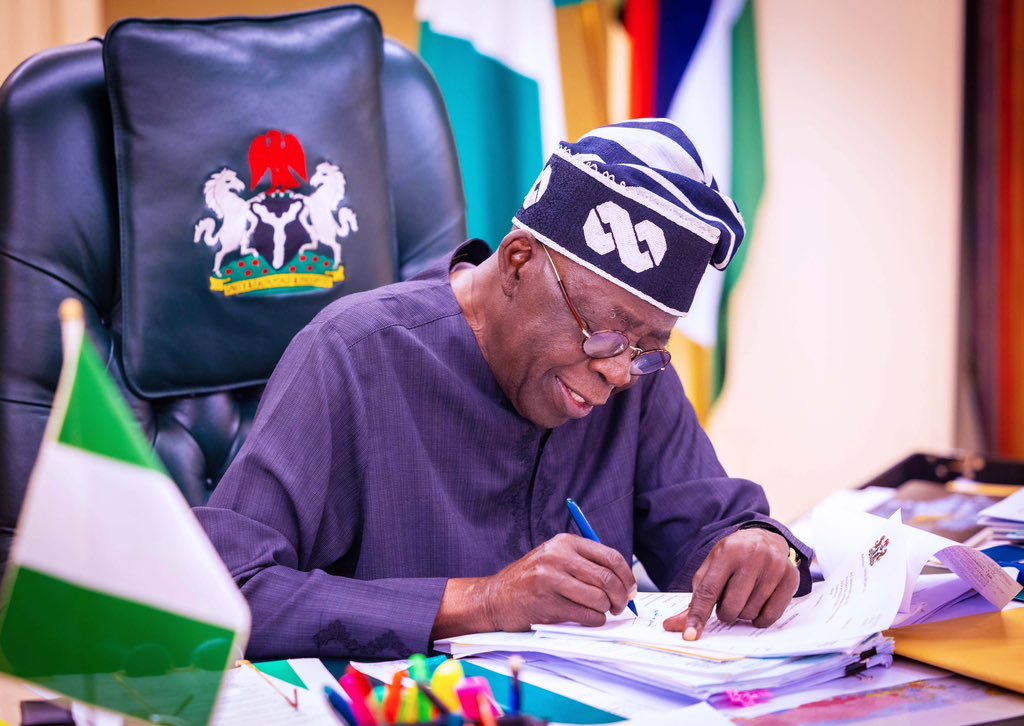
President Bola Ahmed Tinubu has made significant changes in the leadership of Nigeria’s military, appointing new Service Chiefs following the removal of General Christopher Gwabin Musa as the Chief of Defence Staff. The appointments were announced in a statement issued by Sunday Dare, Special Adviser to the President on Media and Public Communication.
Lieutenant-General Olufemi Oluyede has been appointed as the new Chief of Defence Staff, replacing General Musa. Major-General Waidi Shaibu has been named the new Chief of Army Staff, Air Vice Marshal Sunday Kelvin Aneke as the new Chief of Air Staff, and Rear Admiral Idi Abbas as the new Chief of Naval Staff. Major-General E.A.P Undiendeye remains as the Chief of Defence Intelligence.
The President expressed his appreciation for the outgoing Service Chiefs and charged the newly appointed ones to maintain the professionalism and vigilance that define the Nigerian Armed Forces.
The New Service Chiefs
Lieutenant-General Olufemi Oluyede
Lieutenant-General Olufemi Olatubosun Oluyede is a seasoned officer with over three decades of service in the Nigerian Army. He graduated from the 39th Regular Course and has held various leadership roles, including Commander of the Nigerian Army’s elite Infantry Corps. His career includes participation in peacekeeping missions such as the Economic Community of West African States Monitoring Group (ECOMOG) in Liberia and operations in Bakassi and the North East of Nigeria.
Oluyede has served in multiple command positions and holds the prestigious title of ‘Passed Staff Course.’ He hails from Ekiti State and has demonstrated exceptional leadership throughout his career.
Major-General Waidi Shaibu
Major-General Waidi Shaibu, the new Chief of Army Staff, has a distinguished record of service. He previously served as Theatre Commander for Northeast ‘Operation Hadin Kai’ and commanded the 7th Division in Maiduguri. His contributions to the fight against Boko Haram have been notable. Shaibu has also held roles at the Defence Space Agency and the Army Headquarters Department of Training.
In 2024, he received the Security Watch Award for outstanding defense command in Africa.
Rear Admiral Idi Abbas
Rear Admiral Idi Abbas, born on 20 September 1969, is a specialist in Above Water Warfare. He has attended numerous military courses both locally and abroad, including the United Nations Military Observer Course in Tanzania and the National Defence College in Abuja. His career in the Nigerian Navy spans several key positions, including Commanding Officer of NDA and Commander of Operation Tsare-Teku.
Abbas has risen through the ranks, becoming a Rear Admiral in 2020. He enjoys playing hockey and driving and is married to Mrs Aisha Abbas, with two sons.
Air Vice Marshal Sunday Kelvin Aneke
Air Vice Marshal Sunday Kelvin Aneke, born on 20 February 1972, is a graduate of the Nigerian Defence Academy and holds degrees in Physics and International Affairs. He has served in various command and instructional roles, including Director of Policy and Safety at the Nigerian Air Force Headquarters.
Aneke has participated in international peacekeeping missions, including the Democratic Republic of Congo. He is married to Mrs Ngozi Enderline Aneke and has three sons.
Reactions to the Appointments
Following the appointments, sources indicated that senior military officers from the NDA Regular Courses 38, 39, and 40 will exit the force, with at least 60 Generals expected to begin the process of leaving their respective forces.
Former Nigerian Army spokesman Brigadier-General Sani Usman Kukasheka (rtd) described the change as a step in the right direction to address insecurity. However, the African Democratic Congress (ADC) called for transparency regarding the reasons behind the sudden changes, citing concerns over the alleged coup plot.
Former Kaduna Central senator Shehu Sani supported the shake-up, emphasizing the need for periodic changes in security leadership to achieve results. Nigerians on social media expressed mixed reactions, with some questioning the legitimacy of the president’s authority to sack military chiefs.
Conclusion
The appointment of new Service Chiefs marks a significant shift in Nigeria’s military leadership, aimed at strengthening national security. While some view the changes as necessary, others call for greater transparency and clarity regarding the reasons behind the reshuffle. As the new leaders take charge, the focus remains on enhancing the professionalism and effectiveness of the Nigerian Armed Forces.