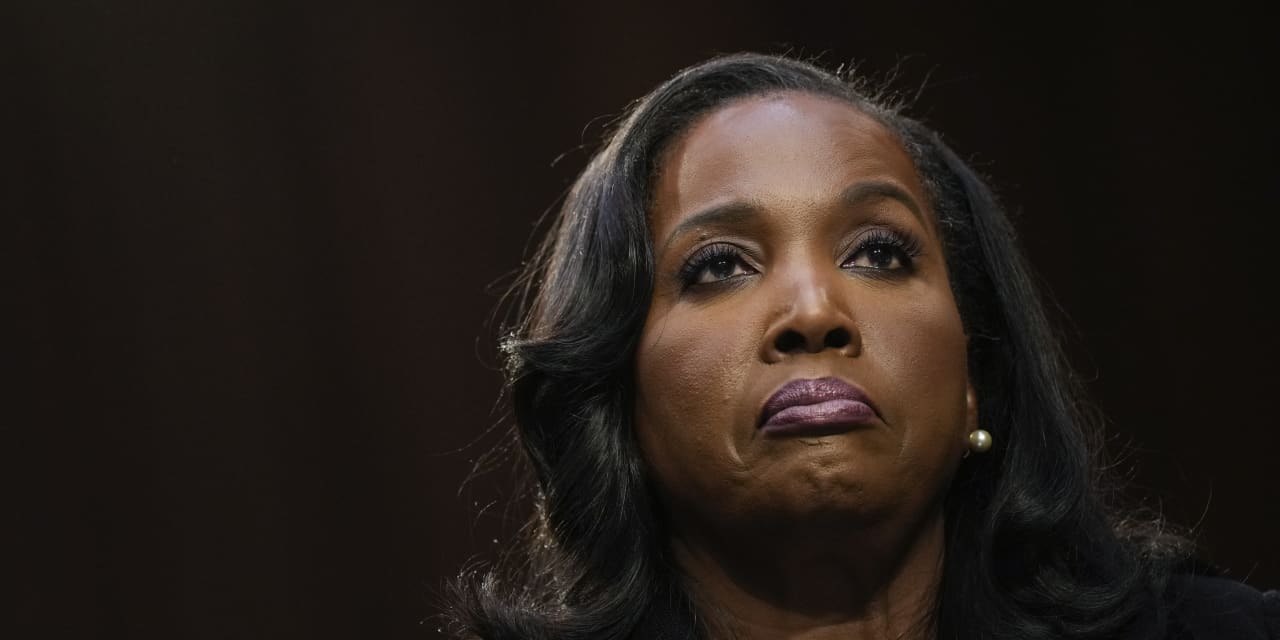
Trump Fires Fed Governor Lisa Cook, Sparks Debate Over Monetary Policy Independence
President Donald Trump recently announced the firing of Federal Reserve Governor Lisa Cook, marking a significant shift in the ongoing tension between the administration and the central bank. This move came just days after Trump’s team accused Cook of mortgage fraud, highlighting a growing conflict over the Fed’s role in shaping U.S. monetary policy.
Cook, who was the first Black woman to serve on the Fed’s board of governors, had been confirmed for a 14-year term in 2022, with her tenure set to expire in 2038. Her removal has sparked concerns about the independence of the Fed, an institution designed to operate free from political influence.
A Political Power Play?
Experts suggest that Trump’s decision may not be solely based on allegations against Cook but rather an attempt to exert greater control over the Fed. Julia Coronado, founder of MacroPolicy Perspectives, stated that Trump is trying to dismantle the Fed’s structure, which is meant to resist political interference. “It is extraordinarily dangerous to the financial stability of the United States and global capital markets,” she said.
Trump has consistently pushed the Fed to lower interest rates, but his efforts have been met with resistance from Fed Chair Jerome Powell and other officials. The president’s recent actions could signal a broader strategy to reshape the Fed with his allies, potentially altering the course of monetary policy in the country.
Legal Challenges and Uncertainty
The legality of Trump’s decision remains uncertain. While the Supreme Court has ruled that the president can fire leaders of independent agencies, it noted that the Fed is a “uniquely structured, quasi-private entity.” The law governing the Fed allows governors to be removed “for cause by the president,” typically interpreted as serious misconduct.
A spokesperson for the Fed did not comment on the matter, leaving many questions unanswered. Trump claimed he lacked confidence in Cook’s integrity, citing “deceitful and potentially criminal conduct.” However, critics argue that these allegations may be a cover for Trump’s broader agenda to gain more influence over the central bank.
Market Reactions and Economic Concerns
Financial markets responded cautiously to the news. The dollar weakened initially, while long-term Treasury yields rose. The ICE U.S. Dollar Index fell 0.3% before recovering slightly. Meanwhile, the yield on the 10-year Treasury note increased by 1.1 basis points, reflecting investor uncertainty.
Stock-index futures also showed mixed results, with the Dow Jones Industrial Average declining slightly. Investors were also reacting to Trump’s threats to impose tariffs on semiconductors and advanced technology from countries that regulate U.S. tech companies.
Resistance and Legal Battles
Cook has refused to resign, stating she has “no intention of being bullied to step down.” Experts believe she may challenge the dismissal legally, arguing that the president lacks the authority to remove her. If the case proceeds, a federal judge could determine whether the dismissal is justified and whether Cook can remain in her position during the legal process.
If the court rules in favor of Cook, the Trump administration might seek intervention from the Supreme Court, turning the issue into a constitutional debate. Mark Spindel, co-author of a book on Fed independence, emphasized that the question of what constitutes “cause” for removal is now a critical legal and constitutional issue.
Political and Economic Implications
Democratic Senator Elizabeth Warren criticized Trump’s actions, calling it an “authoritarian power grab” that violates the Federal Reserve Act. She argued that the president is using Cook as a scapegoat for his failure to address inflation and reduce costs for Americans.
Meanwhile, economist Nancy Van Houten warned that rapidly slashing interest rates would likely backfire, causing investors to worry about inflation and driving long-term rates higher. This could lead to a more expensive borrowing environment, stifling economic growth.
As the situation unfolds, the implications for the Fed’s independence and the broader economy remain unclear. The outcome of any legal challenges will be closely watched, as it could set a precedent for future presidential interactions with the central bank.

Related posts:

Fiction park: He was the best in class. He still wasn’t good enough

Gagan Thapa takes oath as Congress president, vows to regain public trust

Inside knowledge that has locals gripped by fear after gran’s body found decomposing in cattle dip

New property purchase disclosure rule in Japan sparks fears it may curb foreign investment

Dino-mite treasures: inside Singapore’s Fort Knox storing playthings of ultra-rich