UK Economy Faces Challenges as Inflation Rises and Growth Lags
The UK economy is encountering significant hurdles, with inflation reaching its highest level in the G7. This development comes as the Labour government’s promises of economic growth are being questioned. The International Monetary Fund (IMF) has issued warnings about the state of the British economy, highlighting concerns over rising inflation and stagnant growth.
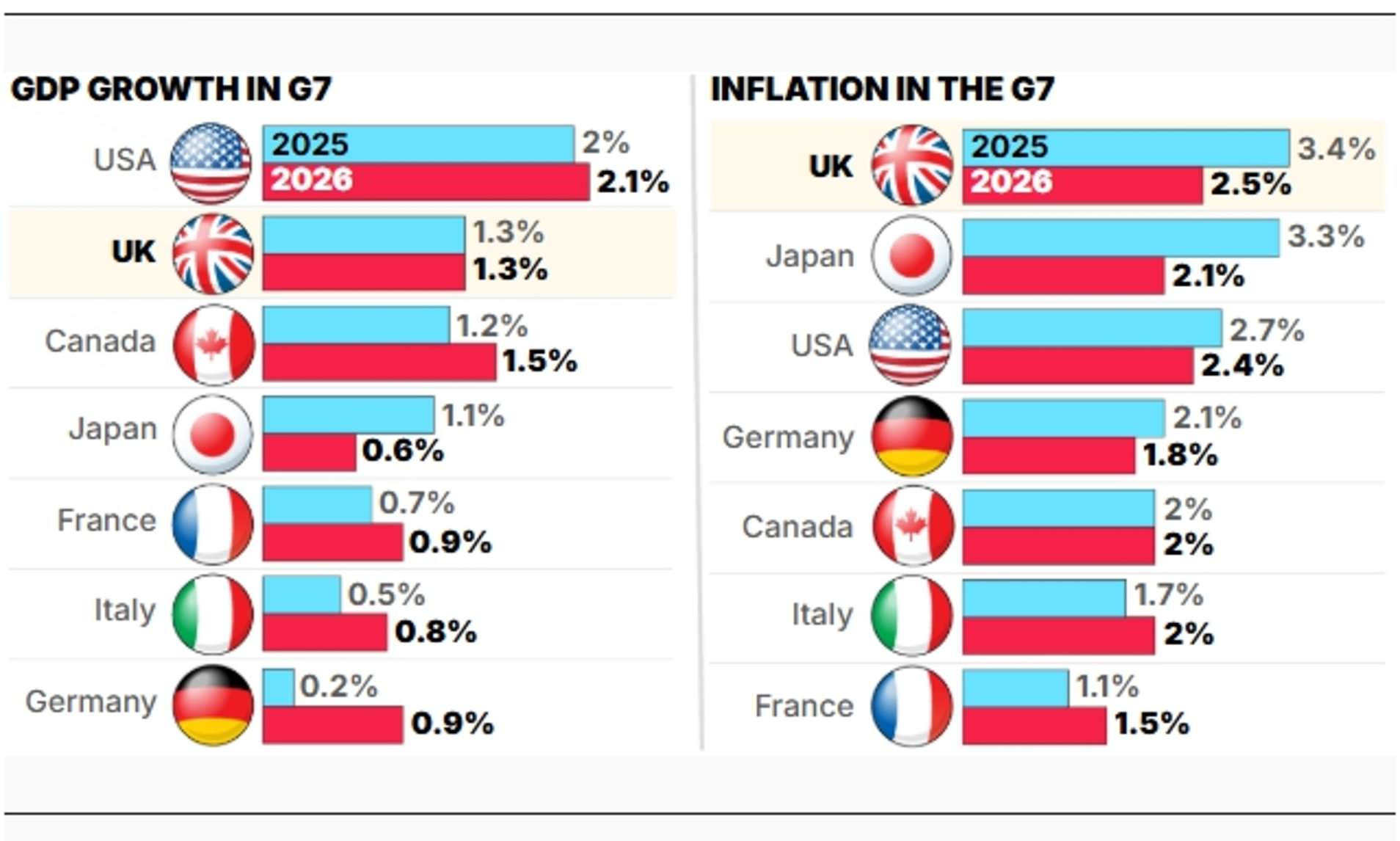
In a recent update, the IMF forecasted that the UK’s inflation will be 3.4% this year and 2.5% in 2026, which is higher than in other G7 countries such as the United States, Germany, France, Italy, Canada, and Japan. This situation is exacerbated by tax hikes and increased costs imposed on businesses by the Chancellor, making it more challenging for the Bank of England to reduce interest rates.
Unemployment Hits Four-Year High
Unemployment has surged to a four-year high of 4.8%, according to the Office for National Statistics (ONS). The rise in unemployment is primarily driven by younger people, with joblessness among those aged 25-34 at the highest rate since 2020. Meanwhile, a record number of over-65s—more than 1.7 million—are now in work, indicating a shift in the labor market dynamics.
Shadow Chancellor Sir Mel Stride commented on the situation, stating that the IMF assessment paints a grim picture. He criticized the Labour government for allowing the cost of living to rise, debt to balloon, and business confidence to fall to record lows. Taxes are increasing, and families are feeling the pressure from all sides.
Economic Performance and Policy Concerns
Britain’s economy initially outperformed most of its G7 rivals but is now slipping behind due to the £40 billion of tax increases implemented in last October’s Budget. These tax hikes have impacted consumer spending and business investment. Alex Hall-Chen, principal policy advisor for employment at the Institute of Directors, emphasized the need for a change in policy direction if the government aims to stimulate growth and support businesses in creating jobs.
A further tax raid, potentially amounting to £30 billion, is expected in the upcoming Budget as the Chancellor struggles to fund her spending plans and expansion of the state. This could limit the Bank of England’s ability to cut interest rates from the current level of 4%, which is a blow to millions of families hoping for cheaper mortgages.
IMF Projections and Global Outlook
The IMF expects the UK economy to grow by 1.3% this year and next, leaving it behind Donald Trump’s America in 2025 and both the US and Canada in 2026. While Britain’s service-dominated economy is performing better than Germany and France, which are either in recession or barely growing, the overall outlook remains concerning.
The Chancellor highlighted a 0.1 percentage point rise in this year’s growth forecast from the IMF, though she overlooked the downgrade for 2026. She pointed to an increase in average disposable income since the election, but failed to acknowledge that these gains are being offset by surging food and energy costs.
Challenges Ahead
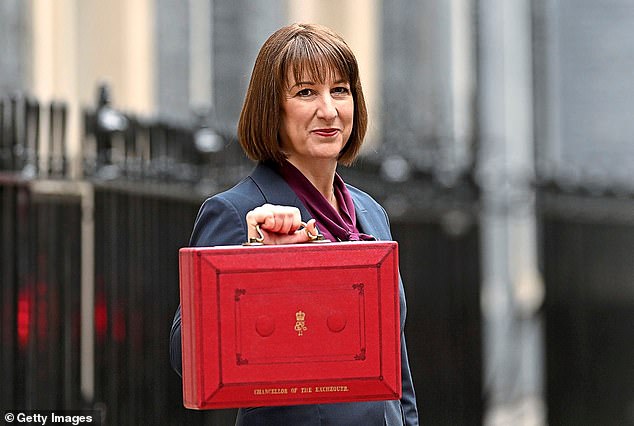
The latest IMF projections present challenges for the Chancellor as she prepares for the November 26 Budget. Reeves, who is set to arrive in Washington on Tuesday, is reportedly disappointed by early projections for productivity and output from the Office of Budget Responsibility. Early reports suggest a potential £30 billion black hole, likely to be filled by further, unknown tax increases.
The Fund is concerned about budget deficits and debt levels in advanced economies, including Britain. It warns that the sharp rise in interest rate returns on government bonds represents an abrupt market reaction, which could have serious implications for market stability and could spread to highly indebted and poorly supervised private markets.
Global Trade Uncertainty
The big shadow over the IMF’s global growth projections remains the Trump tariffs. While Britain may benefit from its early deal with the Trump White House, the Fund remains cautious about the long-term impacts for the world. Trade policy uncertainty persists in the absence of clear agreements, with the situation worsening as China imposes barriers on rare earths and Mr. Trump threatens a new 100% retaliatory tariff on November 1 unless Beijing retreats.
Despite a small upgrade in world growth prospects for this year to 3.2%, the IMF expresses fears that protectionist measures could negatively impact investment decisions by companies and worsen the already bleak outlook for growth and prosperity.